
Most “essential woodshop tools” lists are written by hobbyists for hobbyists. They cover table saws and chisels, then recommend a $300 bandsaw from Amazon.
Professional woodworking shops operate differently. They run production schedules. They manage sheet goods by the pallet. They finish cabinets by the unit, not the project. The tools that keep a professional shop running are not the same tools a weekend woodworker reaches for.
So we asked our customers directly.
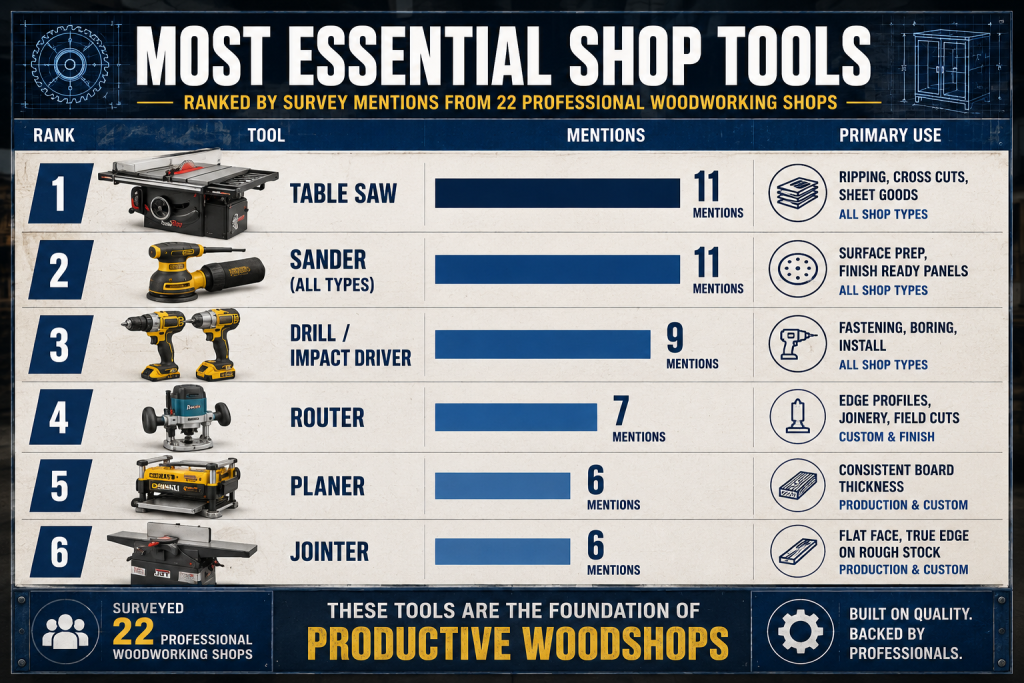
What This Post Covers: In April 2026, Wurth Baer Supply sales reps surveyed 22 professional woodworking shops across the country. We asked each shop owner or lead craftsman the same two questions: 1) What are the top 5 tools every woodworking shop must have, and 2) What one underrated tool has solved a problem others might not know about? This post reports what they said, organized by tool category, ranked by frequency, and grounded in direct customer quotes.
Quick Skim: Wood Shop Must Have Tools
| Tool | Mentions | Primary use | Shop type |
|---|---|---|---|
| Table saw | 11 | Ripping, cross cuts, sheet goods | All shop types |
| Sander (all types) | 11 | Surface prep, finish ready panels | All shop types |
| Drill / impact driver | 9 | Fastening, boring, install | All shop types |
| Router | 7 | Edge profiles, joinery, field cuts | Custom and finish |
| Planer | 6 | Consistent board thickness | Production and custom |
| Jointer | 6 | Flat face, true edge on rough stock | Production and custom |
| Staple / nail gun | 5 | Face frames, box assembly, trim | Framing, assembly, install |
| Miter / chop saw | 4 | Angle cuts, cross cuts on lumber | Framing and trim |
| Edgebander | 4 | Edge finishing on sheet goods at volume | Production cabinet shops |
| CNC machine | 3 | Layout, routing, drilling, cutting | High-volume production |
The Underrated Tools: One Pick Per Shop
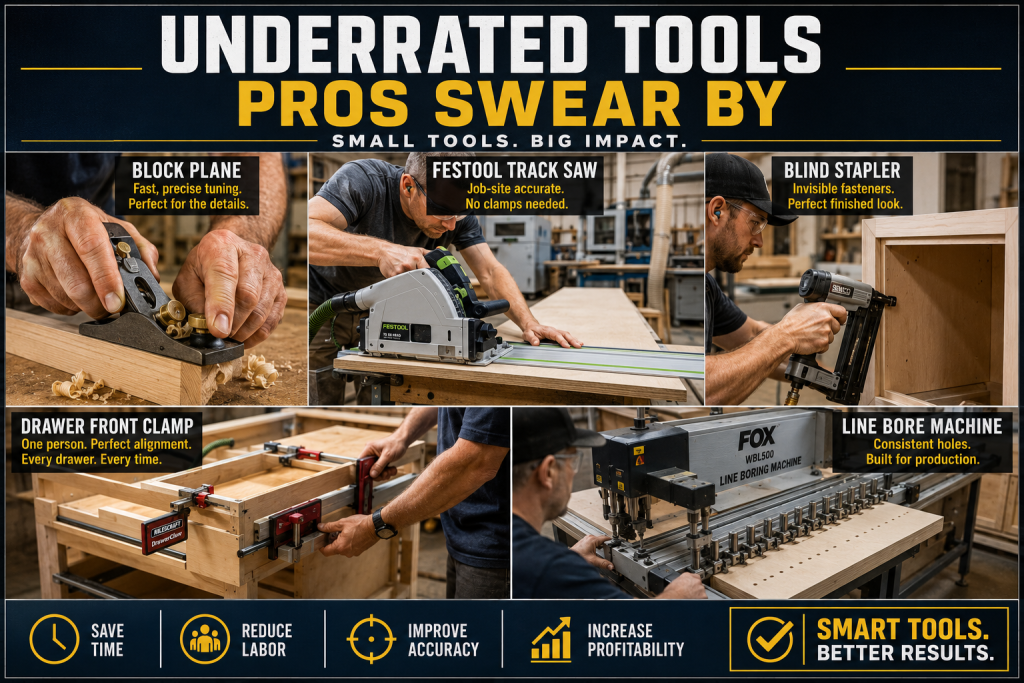
Block Plane “It excels at tasks too small for a machine but too tedious for sandpaper.” One-handed, no setup, works on end grain, sharp edges, and jointer chatter. Once tuned, it replaces several minutes of sanding per part.
Festool Track Saw Portable, no clamping required, job-site accurate cuts on any substrate. One shop owner takes it to every job site and makes any cut without worrying about compromising quality.
Wurth Handheld Scraper with Interchangeable Blades One shop sprayed a panel the wrong color. Instead of remaking it, they used the scraper to remove the finish cleanly and refinished the panel. One simple hand tool kept a mistake from becoming a write-off. One simple hand tool kept a mistake from becoming a write-off.
Blind Stapler Back-staples face frames onto cabinet boxes. Shops can pre-finish face frames, then attach them to the box without visible fasteners and without disrupting the finish booth schedule.
Drawer Front Clamp Holds the drawer front in alignment during attachment to the drawer box. Turns a two-person alignment job into a one-person task and reduces misaligned fronts during assembly.
Line Bore Machine One shop owner named it the best underrated tool in his operation. For any cabinet shop drilling shelf pin holes and hinge locations at volume, a line bore machine is worth a hard look.
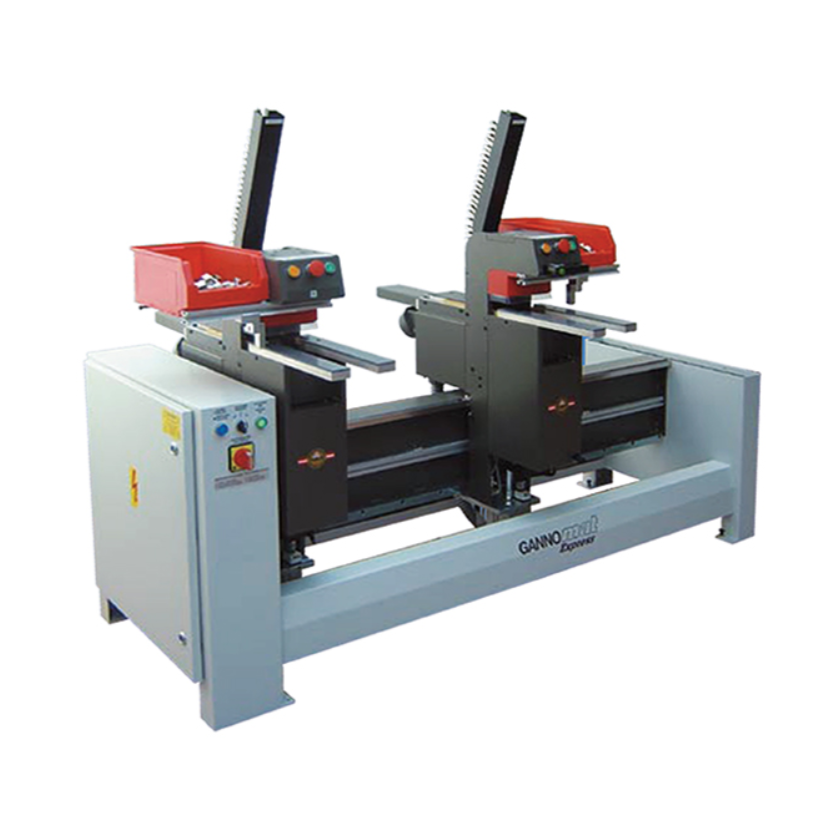
Drill and Dowel Machine One respondent said it changed production and sped up cabinet assembly time significantly. Dedicated dowel joinery removes the layout, pre-drilling, and alignment steps that slow down box assembly when done by hand
Battery-powered Hand Tools One shop named all cordless hand tools for one reason: ease of use especially in the field. For shops that do on-site installation alongside production work, cordless tools cut friction at every step.
Chisels One respondent traced the hand chisel from Egyptian pyramid construction to Roman stonework to modern cabinetmaking. His point is practical: precision joinery requires a tool that works at the scale of the joint, not the machine. “Now it’s the machine that supplies the craftsmanship… but I hope that the art of the process is never lost.”
Multi-function Stud Finder Named specifically for field installation. One pass locates studs, pipes, and existing electrical together. During wall cabinet mounting, that eliminates guesswork and prevents costly errors.
Cutting and dimensioning
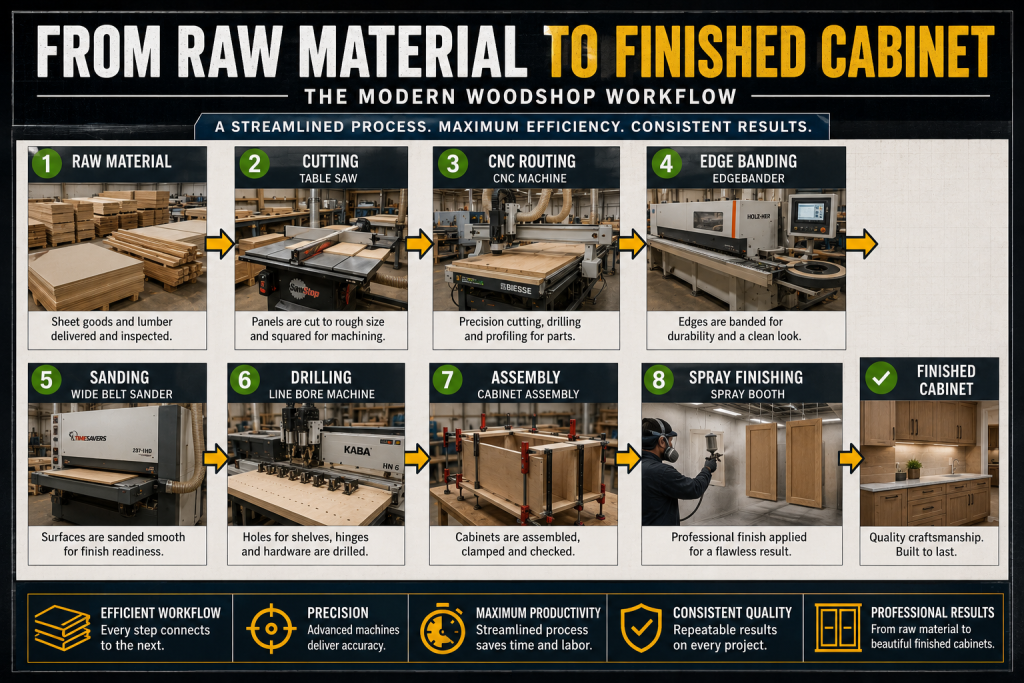
Table Saw
The table saw is the closest thing to a universal answer across all 22 shops. Eleven respondents named it explicitly, covering every shop type from small custom operations to high-volume production floors.
“Our SawStop table saw is absolutely essential to our daily operations.” Professional cabinet shop, survey respondent
One shop listed it as a core tool for both dimensional lumber and sheet goods. Another noted it handles rip cuts and cross cuts, making it the starting point for almost every project. For production shops, the table saw anchors the cutting workflow before material moves to a panel saw or CNC.
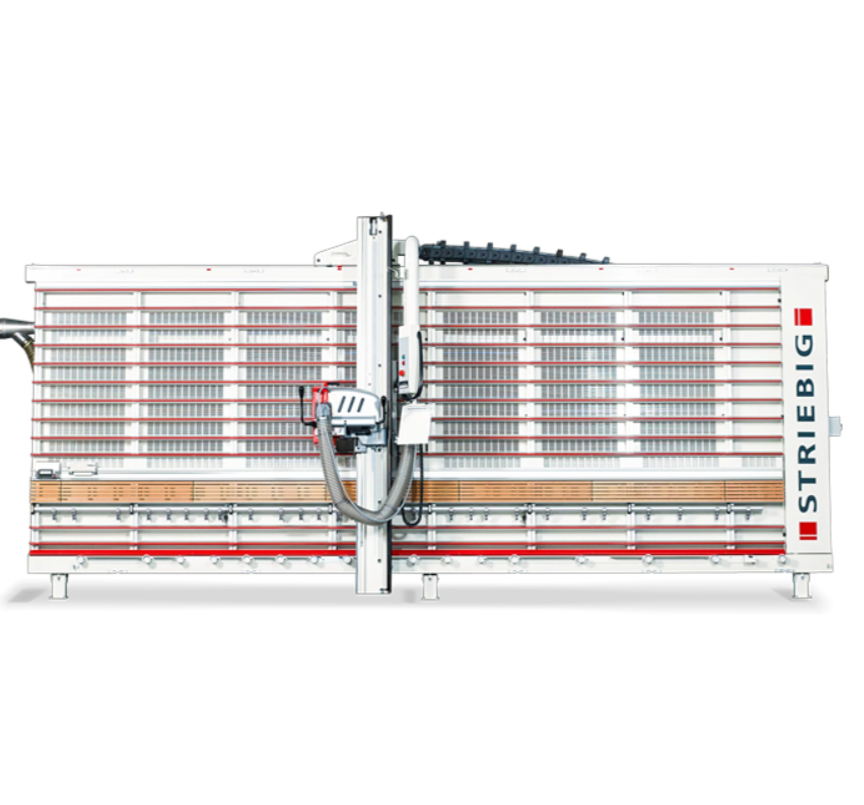
Vertical Panel Saw
Three production shops named the vertical panel saw. One described it as a vertical-style saw that saves floor space and lets one person break down sheet goods efficiently and accurately. For shops running plywood by volume, a vertical panel saw reduces floor footprint and removes the need for a second set of hands on large sheets.
Miter Saw, Chop Saw, and Radial Arm Saw
Four shops named a dedicated crosscutting saw. Two named a miter saw, one a chop saw, and one named a radial arm saw. All four serve the same core function: fast, repeatable angle cuts and cross cuts on dimensional lumber and trim. The shops that run framing and finish work alongside cabinetry use a dedicated crosscutting saw daily.
Surface Prep and Sanding
Eleven shops named some form of sander, tying it with the table saw as the most-mentioned tool category overall.
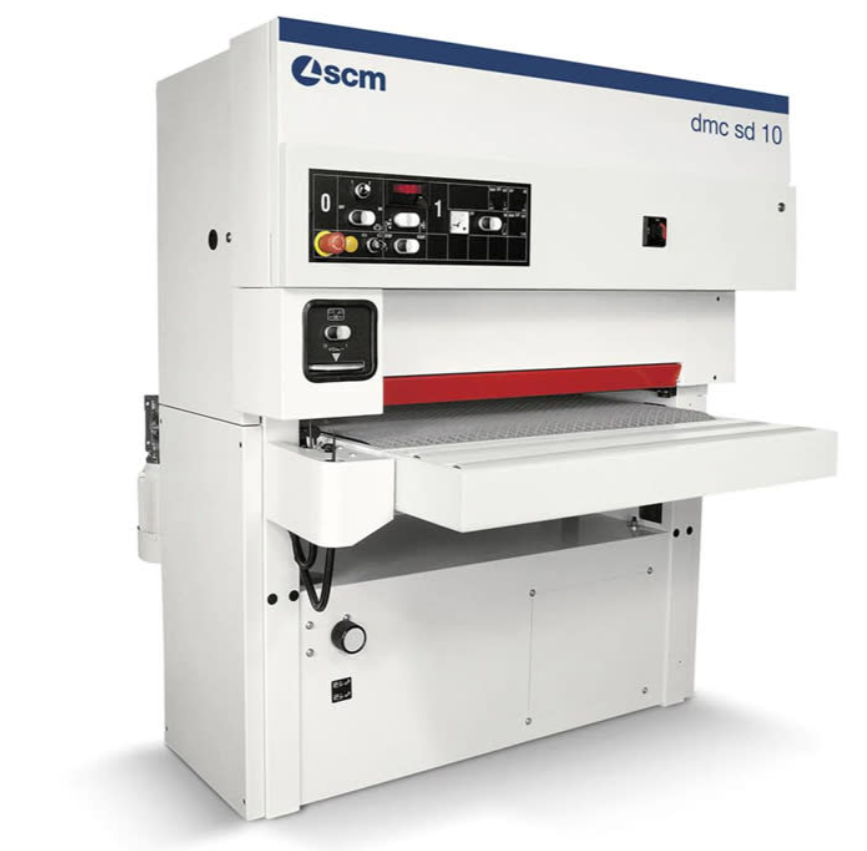
Wide Belt Sander
Larger production shops named the wide belt sander. Three shops listed it as a core machine. It processes large volumes of material quickly and produces a consistent surface across full panels before finishing.
Orbital and Random Orbital Sander
Six smaller custom shops and field-service operations named orbital sanders.
One shop described the hand sander as the right tool for fine finish work and reaching tight areas a stationary machine cannot access. Another specifically named the Mirka sander as a top-5 shop tool.
If you run a production floor, a wide belt sander is the priority. If you do custom work or field installation, a quality orbital sander like the Mirka DEROS covers both shop prep and on-site finishing.
Drilling, fastening, and assembly
Drill and Impact Driver
Nine shops named drills or impact drivers, making this the third most-mentioned category overall. One shop listed the drill and impact driver as a paired tool. Another called a quality set of drills essential for both install and fabrication, noting that a bit change converts the same tool from drilling to fastening. A third named the impact driver for the torque it delivers during cabinet assembly.
Battery-powered tools came up repeatedly. One shop cited ease of use especially in the field as the core reason for going cordless.
Staple Gun and Nail Gun
Five shops named pneumatic or electric fastening tools. These cover face frame attachment, box assembly, trim installation, and furniture work.
Hinge Press
One shop named the hinge press as a top-5 shop tool. For cabinet shops installing cup hinges at volume, a dedicated hinge press speeds up boring and mounting significantly compared to a drill press or handheld approach.
Pocket Hole and Screw Machines
Two shops listed pocket hole joinery as a core tool. Both use pocket joinery for face frame and cabinet box assembly.
Routing and Shaping
Seven shops named a router, concentrated in custom, finish, and field-service operations. One shop led with “Routers, routers, routers” as their first answer. Another uses it for trim profiles and roundovers. Three more named it for edge work, joinery cuts, and decorative profiles.
One field-installation shop named a portable router for cleaning up edges and openings during field installation, where a stationary setup is not possible. For shops that do both production work and on-site installation, a corded bench router and a trim router cover different stages of the same job.
Production Machinery
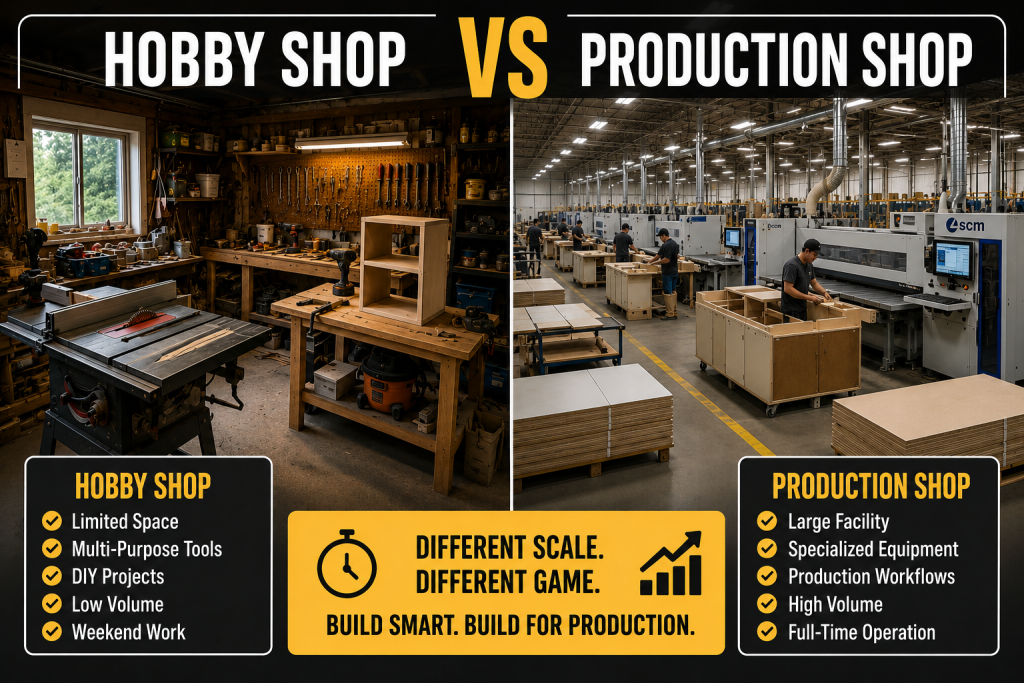
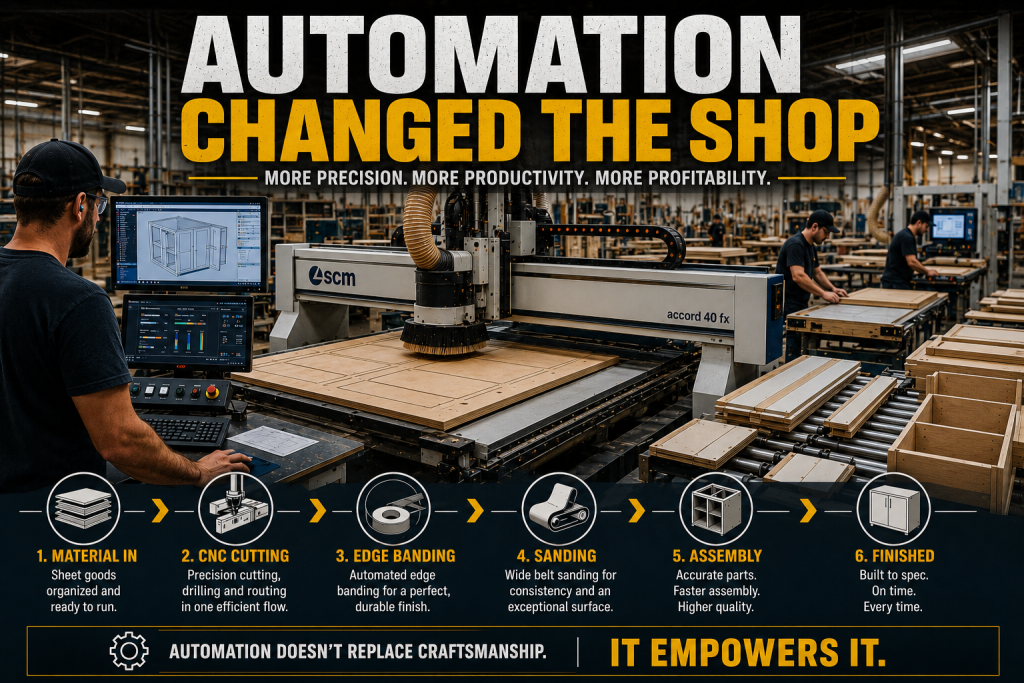
This is the category absent from every competitor guide online. These tools define a professional cabinet shop and separate it from a hobbyist setup or small custom operation.
Edgebander
Four shops named the edgebander. One noted that the edgebander delivered more even and consistent edge finishing across their work. For shops running melamine, plywood, or MDF at volume, an edgebander is not optional. Hand-edging at production scale is not viable.
CNC Machine
Three shops named the CNC, but the responses carry more weight than the count suggests.
“We were literally hand cutting everything prior to that, and all of a sudden we could get rid of a bunch of ancillary machines and work much faster.” Production shop owner, on getting their first CNC 14 years ago
Two of those three shops listed CNC as their top tool overall. For shops running repeat cabinet configurations, the CNC replaces layout, routing, drilling, and some cutting operations that would otherwise require separate machines and separate labor hours.
Hinge Boring Machine
One shop named their hinge boring machine as a top-5 tool, stating that losing it “would significantly slow down production.” For shops installing concealed hinges at volume, a dedicated boring machine produces consistent cup placements faster than any handheld alternative.
Finishing
Spray Guns
One shop listed spray guns among their top 5 tools. For a production cabinet shop, a quality spray setup is not finishing equipment. It is a production stage with its own workflow, its own schedule, and dedicated floor space.
Air-Assisted Airless Sprayer
One shop named an air-assisted airless sprayer as a core shop tool. This style of sprayer combines compressed air atomization with airless pump pressure, producing a finer finish at higher volume than a standard HVLP gun.
Paint Booth
One shop went further than any other respondent, naming the paint booth itself as a top-5 tool. Their contact described himself as the shop’s best finisher and noted that controlling the booth environment is a production asset in itself. Shops that treat finishing as a dedicated stage produce a more consistent result at a faster rate.
Jointing and Planing
Jointer
Six shops named a jointer. The jointer flattens one face and squares one edge on rough stock, creating the reference surface that every downstream operation depends on. One shop described it as solving the problem of having one face smooth while the other stays rough, a real limitation for shops working with natural-edge or rough-sawn material.
Planer
Six shops named a planer. After the jointer establishes a flat reference face, the planer brings the board to consistent thickness across its full length. Four of those six shops named both tools, which reflects how they function as a pair in a milling workflow.
How to Build Your Shop: A Stage-by-Stage Framework
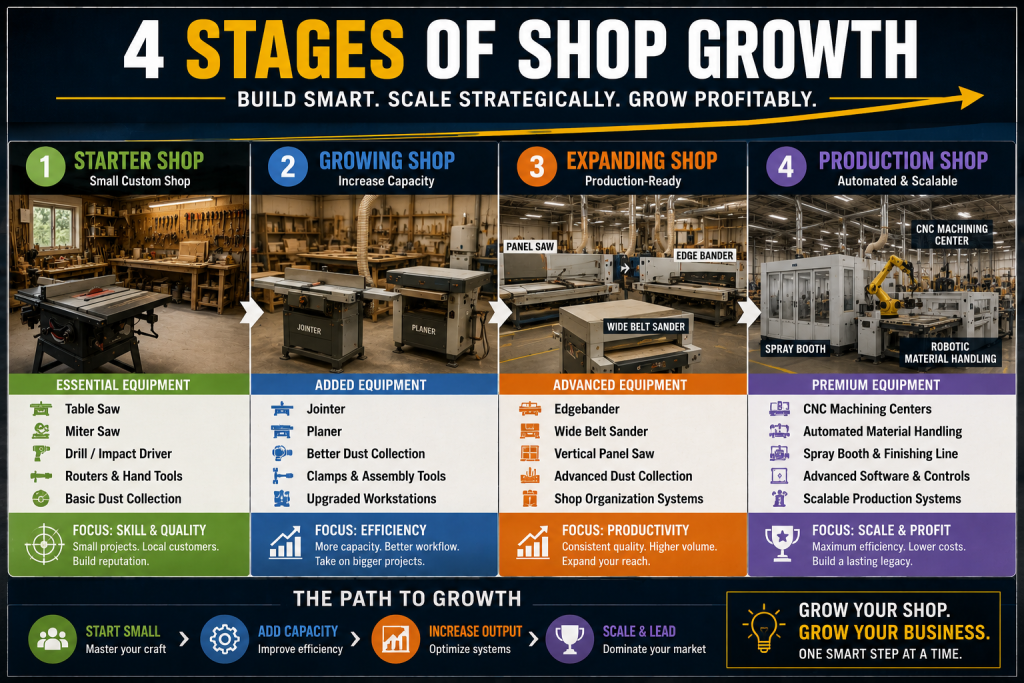
The survey data shows a clear pattern in how professional shops are equipped over time. The following framework is editorial guidance from Wurth Baer Supply, informed by customer responses, not a direct output of the survey.
| Stage | Tools | What it unlocks |
|---|---|---|
| 1: Core cutting and assembly | Table saw, drill and impact driver, miter or chop saw, router, orbital sander | Most custom cabinet and furniture work |
| 2: Dimensional milling | Jointer, planer | Solid wood work, rough-sawn lumber, better material margin |
| 3: Production efficiency | Panel saw, wide belt sander, edgebander, hinge boring machine, line bore | Production pace, time-per-unit compression on every cabinet step |
| 4: High-volume automation | CNC machine, spray booth, air-assisted finishing equipment | Full production shop throughput, as Rheaco Builders described: transformational |
Ready to spec out your shop? Wurth Baer Supply stocks hardware, abrasives, finishing supplies, and installation tools for professional cabinet shops at every stage.
Browse the catalog — Find the tools and supplies your shop needs today.
Contact your local Wurth Baer rep — Get personalized recommendations for your shop’s next stage.