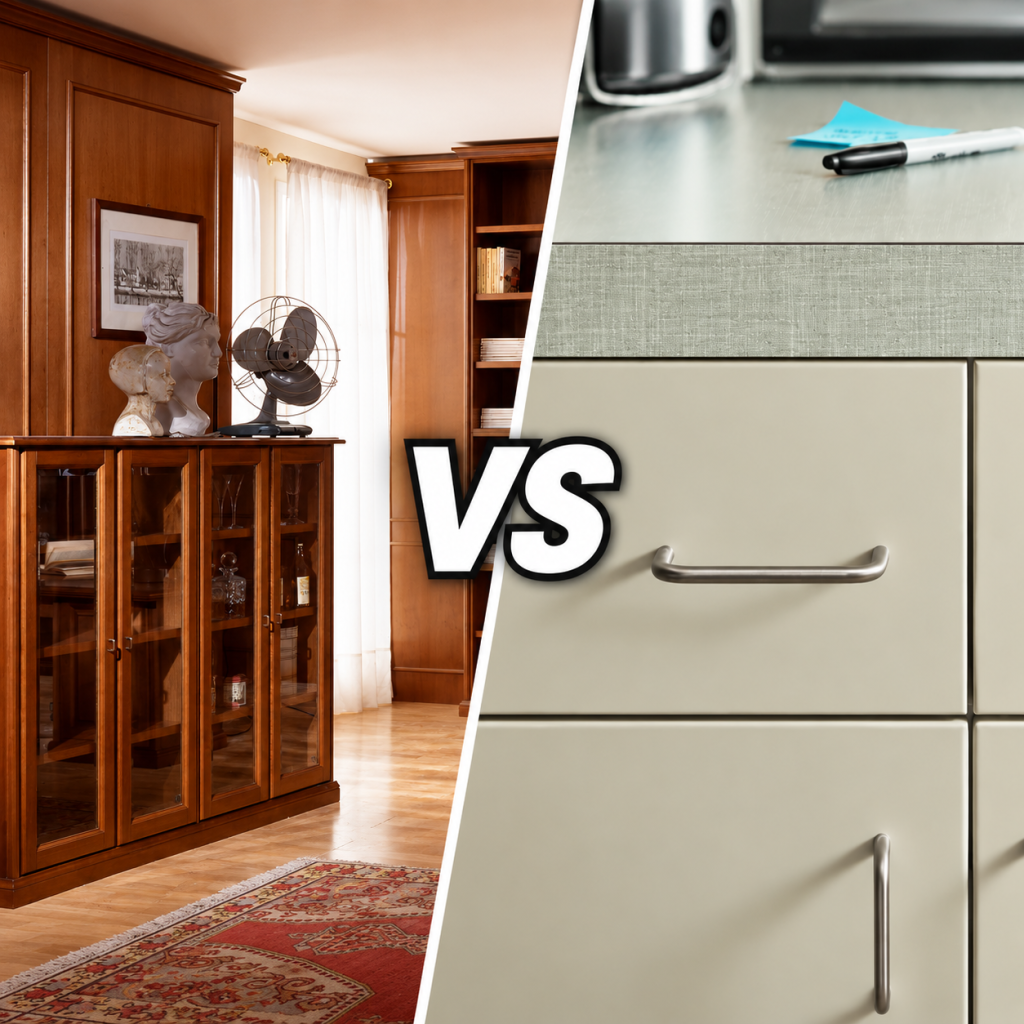

Wood veneer and laminate both give cabinets, furniture, and millwork a finished look. But they differ in appearance, durability, cost, and how shops work with them.
Wood veneer is the better choice for a natural wood look and custom finishes. Laminate is often the better choice for surfaces that need to resist daily wear and require less maintenance.
For cabinet shops and woodworking professionals, the decision also depends on the type of laminate, substrate, edge treatment, and total fabrication cost.
Quick Skim: Wood Veneer vs. Laminate
| Feature | Wood Veneer | High-Pressure Laminate (HPL) | Thermally Fused Laminate (TFL) |
|---|---|---|---|
| Material | Thin layer of real wood | Resin-treated paper layers pressed into a decorative sheet | Resin-treated decorative paper fused to a panel |
| Appearance | Natural wood grain and variation | Consistent colors and realistic patterns | Consistent colors and patterns |
| Durability | Depends on wood species and finish | Strong wear and impact resistance | Best for lower-impact surfaces |
| Moisture resistance | Requires a protective finish and sealed edges | Moisture-resistant face; seams and core still need protection | Moisture-resistant face; edges and core still need protection |
| Maintenance | Depends on finish; generally needs more care | Easy to clean | Easy to clean |
| Cost | Varies by species, grade, and finish labor | Varies by grade and fabrication needs | Often economical for cabinet production |
| Repairability | Limited touch-ups and refinishing may be possible | Surface damage is difficult to repair invisibly | Damaged panels may need replacement |
| Best uses | Custom cabinetry, furniture, architectural millwork | Countertops, work surfaces, commercial fixtures | Cabinet interiors, shelving, and lower-wear doors |
Bottom line: Choose veneer when natural grain and custom finishing matter most. Choose HPL for demanding surfaces. Consider TFL when you need a cost-effective, factory-finished panel for lower-wear applications.
What Is Wood Veneer?
Wood veneer is a thin layer of real wood applied to a supporting surface, often MDF, plywood, or particleboard.
Veneer gives a panel the look of hardwood without using solid lumber throughout the entire piece.
Cabinet shops use veneer for custom doors, furniture panels, architectural millwork, and other applications where natural wood appearance is a priority.
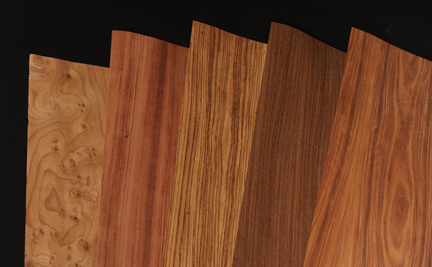
Wood veneer comes in different species, cuts, grades, and backing types.
Common options include:
- Paper-backed veneer: A flexible sheet with a paper backing that helps with handling and application.
- Wood-backed veneer: A multi-ply construction that adds stability and thickness.
- Pressure-sensitive adhesive (PSA) veneer: A sheet with an adhesive backing for compatible applications.
- Veneer-faced plywood: A manufactured panel with real wood veneer already applied.
Species such as white oak, walnut, cherry, and maple offer different grain patterns and colors.
The veneer cut also affects the appearance. Plain-sliced, rift-cut, quarter-sliced, and rotary-cut veneers produce different grain patterns.
When choosing a veneer, consider the wood species, grain direction, matching requirements, and finish before ordering.
What Is Laminate?
Laminate is a manufactured decorative surface used on cabinets, furniture, countertops, and interior panels.
Unlike wood veneer, laminate does not rely on a natural hardwood face. Manufacturers use resin-treated decorative paper to create solid colors, woodgrain patterns, stone looks, and textured finishes.
For woodworking professionals, two common choices are high-pressure laminate and thermally fused laminate.
High-Pressure Laminate (HPL)
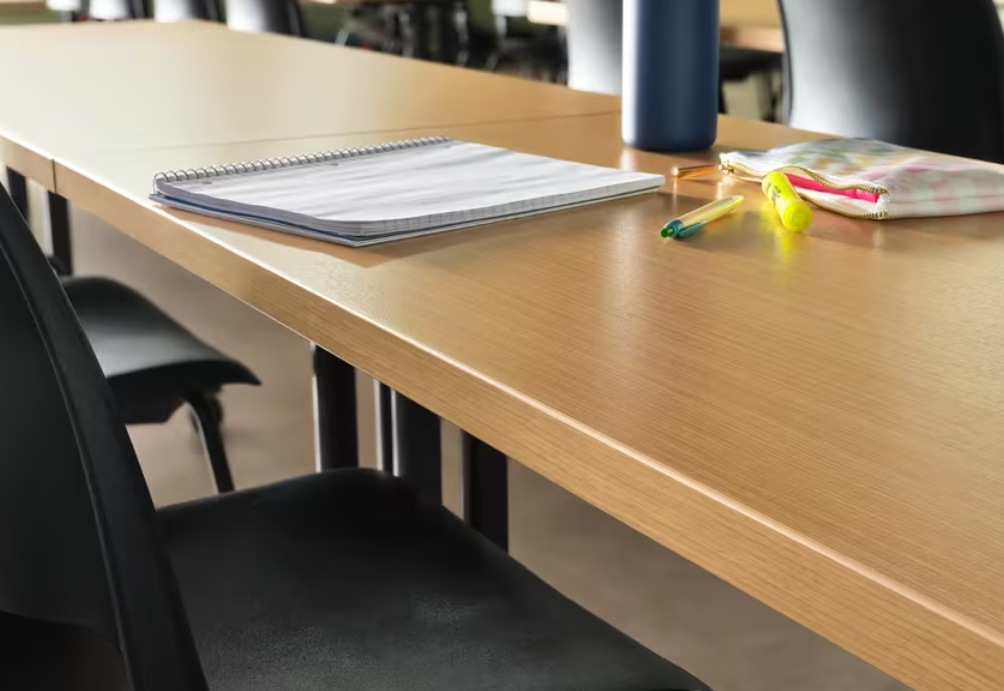
HPL uses layers of resin-treated paper pressed together under high heat and pressure. Fabricators then bond the finished sheet to a suitable substrate.
HPL offers strong resistance to everyday wear, scratches, stains, and impacts.
Shops often use it for countertops, commercial desks, reception areas, and other surfaces that see frequent use.
HPL also comes in different grades. Vertical-grade laminate suits many cabinet faces and walls, while general-purpose and suitable postforming grades serve more demanding horizontal applications.
The correct grade depends on how the finished surface will be used.
Thermally Fused Laminate (TFL)
TFL, often called melamine, has a different construction.
Manufacturers fuse resin-treated decorative paper directly to an engineered wood panel, typically MDF or particleboard.
The result is a factory-finished panel that does not require a separate laminating step.
TFL works well for cabinet interiors, closets, shelving, and many vertical cabinet components.
It offers good everyday performance, but HPL is generally the better choice when a surface needs greater impact and wear resistance.
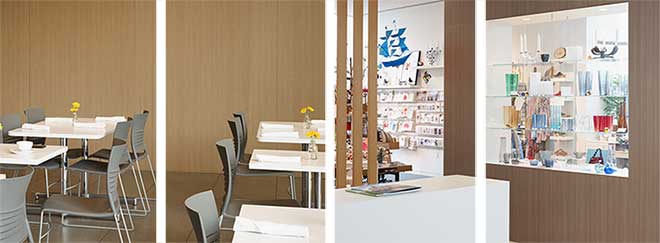
Wood Veneer vs. Laminate: Key Differences
1. Appearance and Design Flexibility
Wood veneer provides authentic grain, natural color variation, and the depth of real hardwood.
Each sheet has its own character. Shops can also select the veneer cut and match adjacent leaves to control the finished appearance.
Book matching, slip matching, and sequenced panels help create a coordinated woodgrain design across cabinet doors and architectural surfaces.
Laminate offers greater consistency from one sheet to the next.
It also provides a wide range of solid colors, woodgrains, and textured finishes. Premium laminate can closely resemble natural wood, especially when the pattern and texture work together.
Choose veneer when natural grain and custom wood finishing are the priorities.
Choose laminate when you need a consistent color or pattern across repeated cabinet components.

2. Durability and Scratch Resistance
Laminate, particularly HPL, generally handles daily surface wear better than a traditional wood veneer finish.
This makes HPL a practical option for commercial fixtures, work surfaces, and busy interiors.
However, not all laminate grades offer the same impact and wear resistance. A vertical-grade sheet may not be the right choice for a heavily used countertop.
Wood veneer can also provide long-lasting performance, but its durability depends on the species, protective topcoat, and amount of wear.
A quality finish helps protect the wood from scratches, stains, and daily contact. Deep damage can still reach the thin veneer face.
For high-use surfaces, select the material based on the expected level of contact rather than appearance alone.
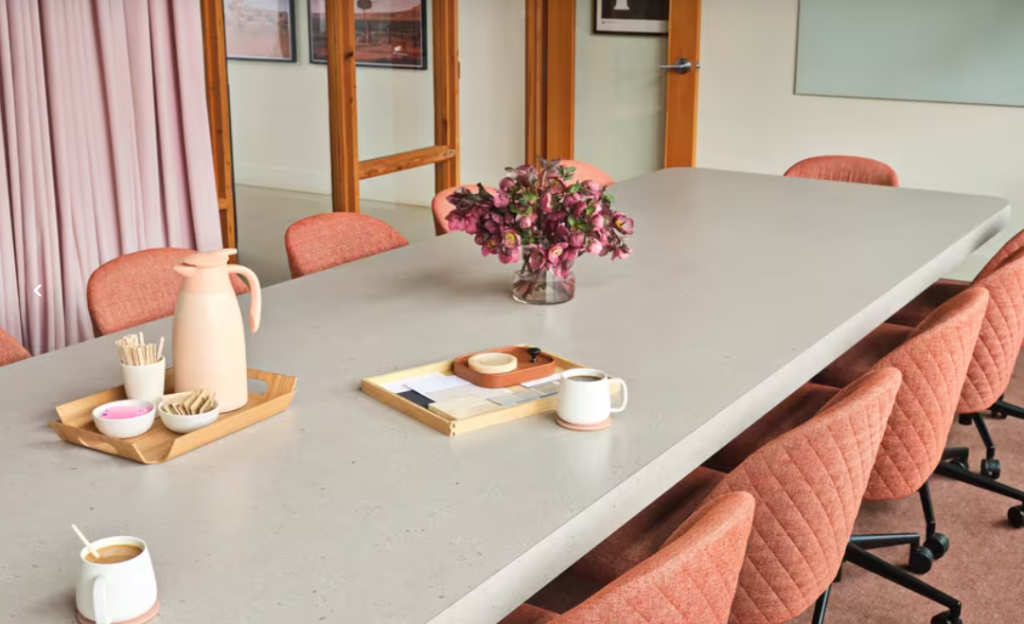
3. Moisture and Heat Resistance
Both surfaces need protection from excess moisture and heat.
HPL has a moisture-resistant surface that is easy to clean. But that does not make a conventional laminate-faced MDF or particleboard panel waterproof.
Water can reach the core through exposed edges, seams, sink cutouts, or damaged joints. Once moisture enters an absorbent core, swelling and panel damage may follow.
Laminate also resists ordinary heat better than many wood finishes. Still, direct contact with hot cookware can cause damage. Use appropriate heat protection.
Wood veneer requires a compatible finish to protect the natural wood face. Its edges and joints also need proper treatment.
For cabinets near sinks or other damp areas, focus on the entire panel assembly.
Check the core material, edge treatment, adhesive, and installation details before choosing either surface.
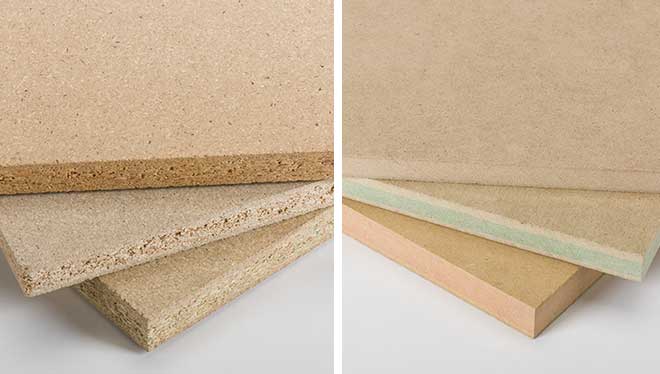
4. Fabrication and Installation
The two materials call for different shop processes.
Wood veneer fabrication may include selecting and matching sheets, applying adhesive, pressing the veneer, sanding, staining, and applying a protective finish.
The exact steps depend on whether the shop uses raw veneer, backed veneer, or prefinished veneer-faced panels.
HPL fabrication commonly involves cutting the laminate, preparing the substrate, bonding the sheet, trimming the edges, and adding a suitable edge treatment.
TFL fabrication starts with a factory-finished panel. Shops can cut, machine, and edge the panel without applying a separate decorative face.
This can reduce production steps for cabinet interiors and other repeatable components.
Panel balance also matters. Using a compatible backer on the reverse side of a fabricated panel helps reduce the risk of warping.
A good surface choice must work with the shop’s equipment, production process, and quality requirements.
5. Material and Fabrication Costs
Laminate is often more economical than veneer, but the finished project cost matters more than the price of a single sheet.
Wood veneer costs vary based on species, grade, cut, availability, and backing.
Custom matching and finishing can also increase production time.
HPL costs depend on the design, grade, sheet size, substrate, adhesive, and fabrication labor.
TFL can reduce some labor costs because the decorative surface arrives factory-applied.
When comparing quotes, include:
- Surface material and substrate
- Adhesive and balancing material
- Cutting, trimming, and pressing time
- Sanding, staining, and finishing
- Edgebanding and installation
- Material waste and potential replacement costs
For example, a custom walnut veneer cabinet door may require more surface preparation and finishing than a TFL door.
That added work may be worth the cost when the project calls for natural walnut grain.
For a large run of standard cabinet interiors, a factory-finished TFL panel may provide better production efficiency.
Compare complete finished components, not just raw material prices.
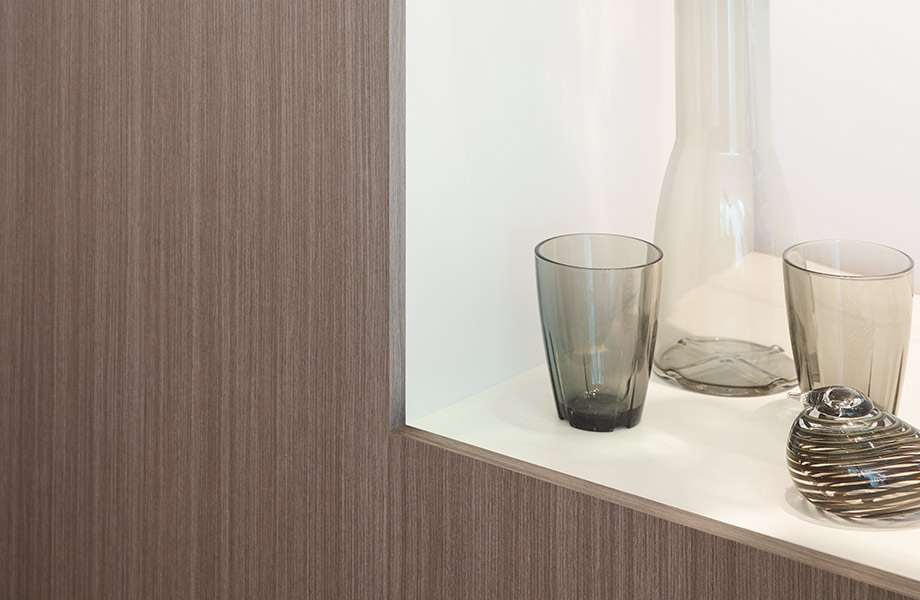
6. Maintenance and Repair
Laminate usually needs less routine care than wood veneer.
A soft cloth and a manufacturer-approved mild cleaner are suitable for many laminate surfaces. Avoid flooding seams or using abrasive cleaning products.
If laminate chips, burns, or suffers deep surface damage, repairs may remain visible. Depending on the damage and construction, resurfacing or replacement may be necessary.
Wood veneer can sometimes be touched up or lightly refinished.
However, the wood layer is thin. Excessive sanding can expose the core, so refinishing must be evaluated carefully.
A veneer surface also needs cleaning products that suit its protective finish.
Both materials last longer when the shop selects the correct surface and the end user follows the manufacturer’s care instructions.

Which Is Better for Different Cabinet and Millwork Applications?
The best choice depends on where the material will be installed and how the finished surface will be used.
| Application | Recommended starting point | Why |
|---|---|---|
| Custom kitchen cabinet fronts | Veneer or laminate | Veneer offers natural wood; laminate offers a consistent finish |
| Kitchen countertops | Suitable horizontal-grade HPL | Handles frequent cleaning and daily wear |
| Cabinet interiors | TFL | Factory-finished panels support efficient production |
| Luxury furniture | Wood veneer | Natural grain and custom finishing add design value |
| Commercial reception desks | HPL or veneer with suitable protection | Choose based on wear level and desired appearance |
| Architectural wall panels | Wood veneer or decorative laminate | Veneer supports natural grain matching; laminate provides design consistency |
| Bathroom cabinetry | Suitable laminate assembly with moisture-protected edges and core | Easier cleaning, with attention to water exposure |
| Closet systems | TFL | Consistent appearance and efficient fabrication |
For projects with different surface demands, it may make sense to use more than one material.
A commercial cabinet assembly, for example, may use a durable HPL worktop with coordinated TFL cabinet interiors.
This approach places more durable material where the project needs it and helps control the overall cost.
What Should Cabinet Shops Check Before Ordering?
Choosing between wood veneer and laminate is only the first step.
To prevent ordering mistakes and unnecessary rework, confirm the following details before production:
- Expected wear: Will the surface see frequent impacts, sliding objects, spills, or repeated cleaning?
- Laminate type and grade: Does the job call for HPL, TFL, vertical-grade HPL, or a suitable horizontal or postforming grade?
- Core material: Is MDF, particleboard, plywood, or a specialized core appropriate for the application?
- Panel balance: Does the construction require a compatible backer to help maintain panel flatness?
- Edge treatment: Will the project use real wood, PVC, ABS, melamine, or another suitable edging material?
- Appearance: Does the specification call for a particular veneer species, grain match, laminate pattern, or texture?
- Finishing and compliance: Are the finishing system, adhesive, emissions requirements, and relevant certifications documented?
For architectural millwork, review the project specifications and applicable standards before selecting the final panel construction.
Taking these steps early helps shops reduce rework, protect finished quality, and keep material orders aligned with project requirements.
Find Wood Veneer, Laminate, and Panel Supplies at Würth Baer Supply
The right surface is only part of a successful cabinet or millwork project. Substrates, adhesives, backing materials, and edgebanding also affect the finished result.
Würth Baer Supply offers materials for both natural wood veneer and decorative laminate applications.
Explore wood veneer sheets for custom surfaces, including backed veneer options.
For demanding decorative surfaces, browse Formica HPL. For factory-finished cabinet construction, explore melamine panels.
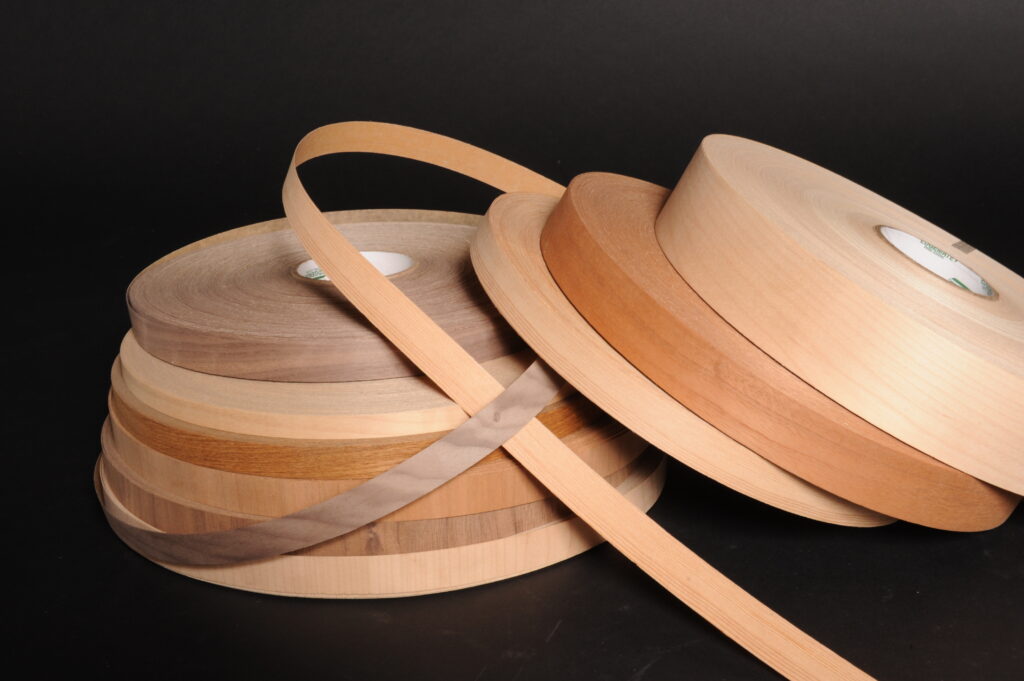
Complete your material selection with hardwood plywood, wood edgebanding, and PVC edgebanding.
Match the material specifications to the job before ordering.
Final Verdict: Wood Veneer vs Laminate
Wood veneer is the stronger choice for projects that call for real wood character, custom grain matching, and finish flexibility.
Laminate is often the better choice for projects that prioritize wear resistance, easy cleaning, and repeatable production.
Within the laminate category, use HPL for more demanding surfaces and consider TFL for lower-impact cabinet components.
The best material is the one that meets the project’s appearance, performance, fabrication, and budget requirements.
Würth Baer Supply helps woodworking professionals source the surfaces and supplies they need to build durable, well-finished cabinets and millwork.