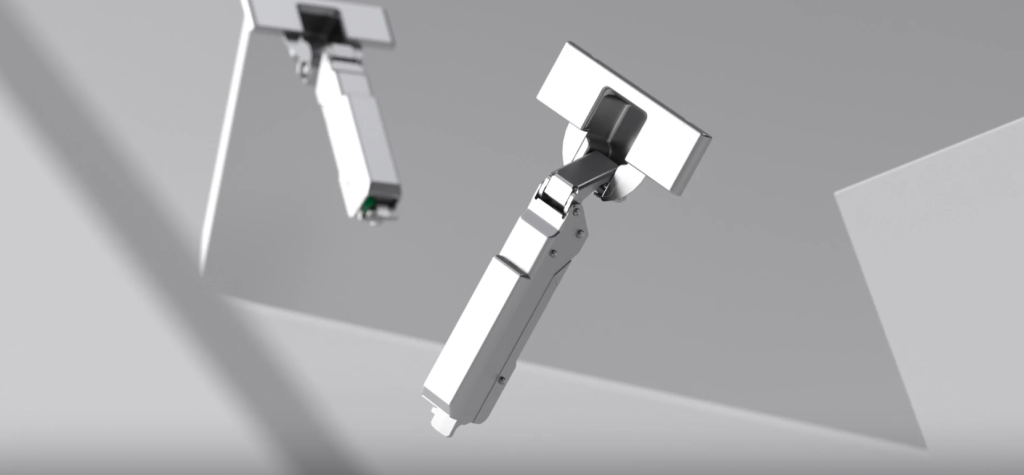

The right cabinet hinge depends first on cabinet construction, door position, overlay, and desired functionality. Identify those four things before comparing brands or part numbers.
- Cabinet construction: Determine whether the cabinet is face frame or frameless. This affects where the hinge or mounting plate attaches.
- Door position: Determine whether the door sits inside the opening or covers part of the cabinet front. This separates inset applications from overlay applications.
- Overlay: Measure how much of the cabinet frame or side panel the closed door covers. Overlay affects hinge geometry and mounting plate selection.
- Functionality: Decide whether you need soft-close, self-close, free-swing, a specific opening angle, extra adjustment, or specialty movement.
For modern cabinetry, concealed European hinges are often the starting point. Würth Baer Supply carries European concealed hinges, concealed face-frame hinges, specialty hinges, glass-door hinges, piano hinges, knife hinges, institutional hinges, mounting plates, and related hardware.
Table of Contents
- The 3 Decisions to Make Before Choosing a Hinge
- 9 Types of Cabinet Hinges
- Cabinet Hinge Comparison Table
- Inset vs Overlay Cabinet Hinges
- Full Overlay vs Half Overlay vs Partial Overlay
- Face Frame vs Frameless Cabinet Hinges
- Soft-Close vs Self-Close Hinges
- How to Measure Cabinet Hinge Overlay
- What Is a 35mm Cabinet Hinge?
- Cabinet Hinge Opening Angles
- How Many Hinges Per Cabinet Door?
- How to Choose a Cabinet Hinge Mounting Plate
- Blum vs GRASS vs Salice Hinges
- How to Identify an Existing Cabinet Hinge
- Common Cabinet Hinge Buying Mistakes
- How to Choose the Right Cabinet Hinge
- Cabinet Hinge FAQs
- Final Takeaway: Types of Cabinet Hinges
Quick Skim: Types of Hinges For Your Cabinet
| If You Have… | Start With… | Check Before Ordering |
|---|---|---|
| Frameless modern cabinet | European concealed hinge | Overlay, mounting plate, opening angle |
| Face-frame modern cabinet | Face-frame hinge | Overlay and frame mounting style |
| Traditional inset cabinet | Butt or mortise hinge | Door clearance and mortise dimensions |
| Folding or corner cabinet door | Specialty hinge | Door geometry and opening sequence |
| Pull-out behind a cabinet door | Zero protrusion European hinge | Required clearance |
| Fine furniture or low-profile hardware | Knife, pin, or invisible hinge | Pivot and machining requirements |
| Long door, lid, or panel | Piano hinge | Length and mounting pattern |
| Glass cabinet door | Glass-door hinge | Glass thickness and mounting method |
| High-use commercial casework | Institutional hinge | Application and manufacturer specifications |
The key rule is simple: do not choose a hinge by appearance alone. Two concealed hinges can look almost identical but use different overlays, mounting plates, drilling patterns, cup depths, or opening geometry.
The 3 Decisions to Make Before Choosing a Hinge
1. Face Frame vs Frameless Cabinet
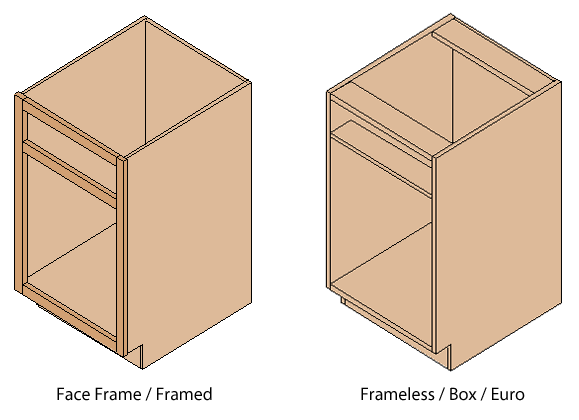
A face-frame cabinet has a frame attached to the front of the cabinet box. The frame forms the visible opening and provides a mounting surface for many hinge designs.
A frameless cabinet has no front frame. The door mounts relative to the cabinet side panel, usually through a hinge mounting plate. Frameless construction is also commonly called European-style or full-access construction.
Würth Baer offers concealed face-frame hinges as a separate product category, including systems from Blum, Grass, Salice, and other manufacturers. Its European concealed hinge categories include hinges used with mounting plates for frameless and other applications.
| Factor | Face Frame | Frameless |
|---|---|---|
| Front construction | Wood frame around cabinet opening | Cabinet side panels form the opening |
| Common hinge mounting | Face frame or frame adapter | Cabinet side panel and mounting plate |
| Overlay measurement | Often measured against face frame | Based on cabinet side or partition |
| Common hinge options | Compact concealed, long-arm with adapter, traditional hinges | European concealed hinges |
| First buying check | Frame and overlay dimensions | Side-panel thickness, overlay, mounting plate |
Do not assume a hinge fits both construction methods. Some systems offer adapters or versions for both, while others are application-specific.
2. Inset vs Overlay Cabinet Door
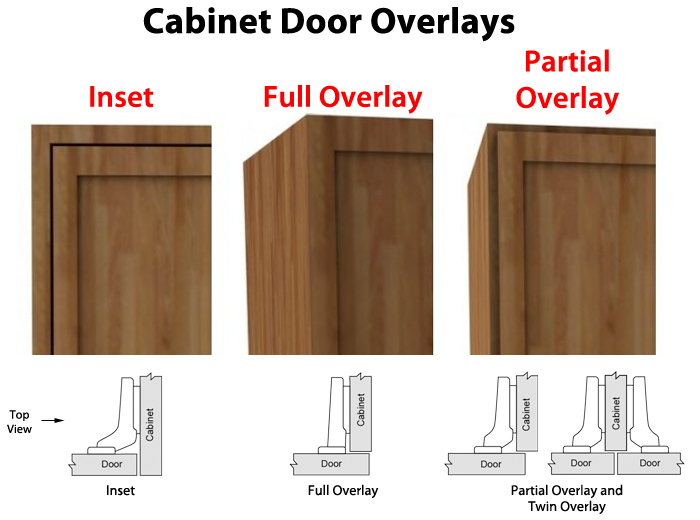
An inset door sits inside the cabinet opening. When closed, its face is roughly flush with the cabinet face or surrounding frame.
An overlay door sits in front of the cabinet opening and covers some or most of the frame or cabinet side.
Think of it this way:
Inset: the door fits inside the opening.
Overlay: the door lies over the opening.
Overlay doors then divide into several configurations:
- Full overlay: The door covers most of the cabinet side, partition, or face-frame area assigned to that door.
- Partial overlay: The door covers only part of a face frame or cabinet surface, leaving more material visible.
- Half overlay: A European hinge application typically used when two doors share one cabinet partition. Each door covers part of that shared panel.
Overlay terminology can vary by cabinet system. Always work from the manufacturer’s application drawing rather than the label alone.
3. Hinge Features
Once you know the cabinet and door geometry, compare operating features.
Soft-close: A damper controls the final part of the closing movement.
Self-close: Spring action pulls the door toward the closed position.
Free-swing: The hinge does not use a spring to pull the door closed.
Opening angle: The maximum door swing. Standard cabinet applications often use angles around 105° to 110°, while wider-opening systems may reach 155°, 170°, or other angles depending on the product. Blum, Salice, GRASS, and other manufacturers offer multiple opening-angle families.
Adjustability: Modern concealed hinges often provide side, depth, and height adjustment through the hinge and mounting plate system.
Clip-on vs screw-on: A clip-on hinge arm can connect to a compatible plate without fastening the arm to the plate with a screw. Screw-on systems use a mechanical fastener.
Door size, weight, and thickness: These affect hinge selection and the number of hinges required.
9 Types of Cabinet Hinges
1. European or Concealed Hinges
What They Are
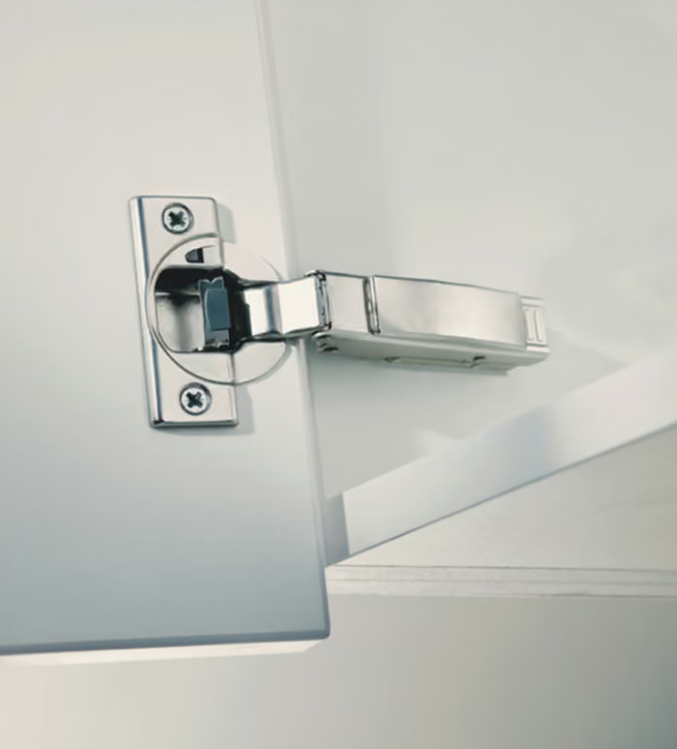
European hinges mount inside the cabinet and remain hidden when the door closes. Most use a cup bored into the back of the door, a hinge arm, and a compatible mounting plate.
Many modern cabinet hinges use a 35 mm cup, although cup size alone does not determine compatibility.
Würth Baer Supply’s European Concealed Long Arm Hinges category includes standard hinges plus dedicated angled, bi-fold, blind corner, mini, pie cut corner, thick door, and zero protrusion applications.
Best For
- Frameless kitchen cabinets
- Modern face-frame applications with compatible mounting hardware
- Overlay or inset doors
- Soft-close cabinetry
- Production cabinetry
- Specialty corner and pull-out applications
Advantages
- Hidden hardware
- Precise adjustment
- Broad overlay options
- Soft-close availability
- Multiple opening angles
- Easy door removal with many clip-on systems
What to Check Before Buying
Confirm cabinet construction, overlay, door thickness, cup drilling, opening angle, mounting plate, and motion technology.
European Hinge Applications at Würth Baer Supply
| European Hinge Application | Best For |
|---|---|
| Standard | Most common overlay and inset doors |
| Angled | Cabinet fronts mounted at nonstandard angles |
| Bi-fold | Connected folding doors |
| Blind corner | Doors used in blind-corner cabinets |
| Mini | Small doors or tight mounting areas |
| Pie cut corner | Folding corner cabinet doors |
| Thick door | Thicker or heavily profiled fronts |
| Zero protrusion | Interior drawers and pull-outs |
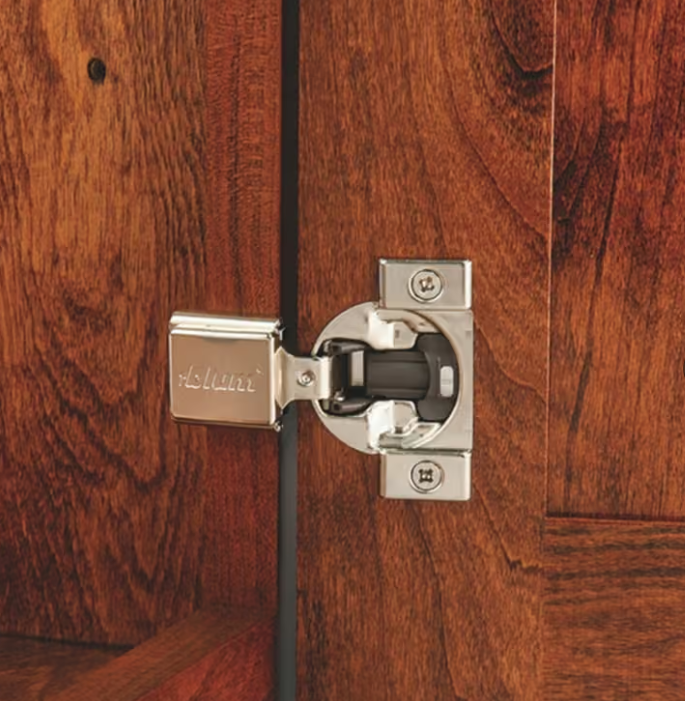
2. Face-Frame Hinges
What They Are
Face-frame hinges are designed around cabinets with a wood frame attached to the front of the box.
This group includes both concealed face-frame hinges and semi-concealed hinges.
A concealed face-frame hinge hides the working hardware when the door closes. A semi-concealed hinge leaves part of the hinge, usually the barrel, visible.
Best For
- Traditional North American kitchen cabinets
- Vanities
- Built-ins
- Replacement cabinet doors
- Partial-overlay and other face-frame applications
Advantages
Face-frame hinges let installers work with the existing front frame rather than treating the cabinet like a frameless box. Concealed versions provide a modern appearance, while semi-concealed versions work well for traditional cabinets and replacement jobs.
What to Check Before Buying
Measure the overlay carefully. Also confirm frame mounting position, door thickness, opening angle, cup drilling if applicable, finish, and closing function.
3. Butt, Mortise, and Non-Mortise Hinges
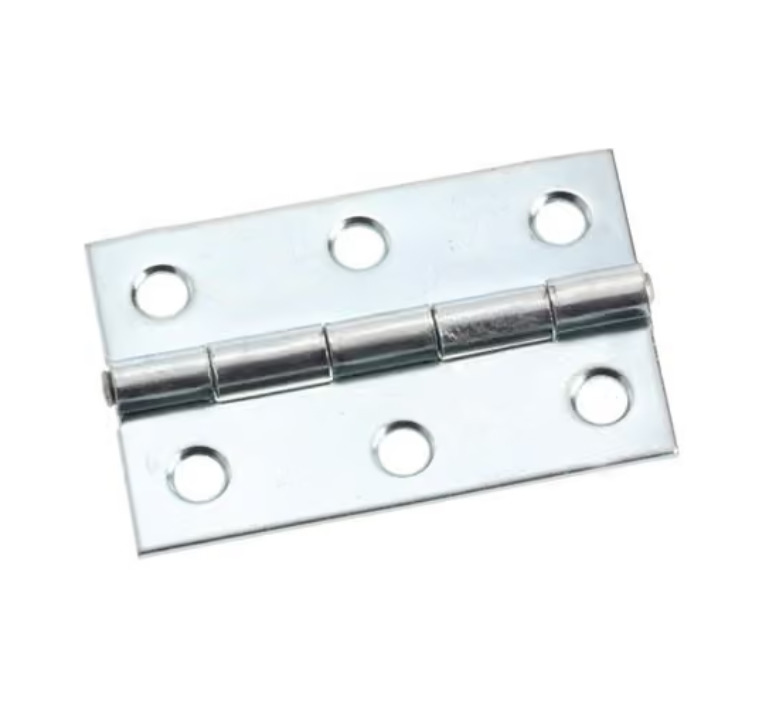
What They Are
A butt hinge uses two leaves joined by a pin. Traditional cabinet installations often recess the leaves into the door and frame.
A full-mortise hinge recesses both leaves so they sit flush with the surrounding surfaces.
A non-mortise hinge uses leaves that nest together, reducing or eliminating the need for full mortises.
These styles belong together because the main buying question is how a traditional leaf hinge will mount between the door and cabinet.
Best For
- Inset cabinet doors
- Fine furniture
- Traditional cabinetry
- Architectural millwork
- Projects where visible hinge hardware fits the design
Advantages
- Simple mechanical design
- Traditional appearance
- Wide choice of finishes
- Useful for furniture-quality work
- No 35 mm cup required
Limitations
Traditional leaf hinges generally provide less adjustment after installation than European concealed systems. Full-mortise hinges also require precise machining.
What to Check Before Buying
Confirm leaf dimensions, hinge thickness, door position, mortise requirements, screw pattern, finish, and load requirements.
4. Demountable and Face-Mount Hinges
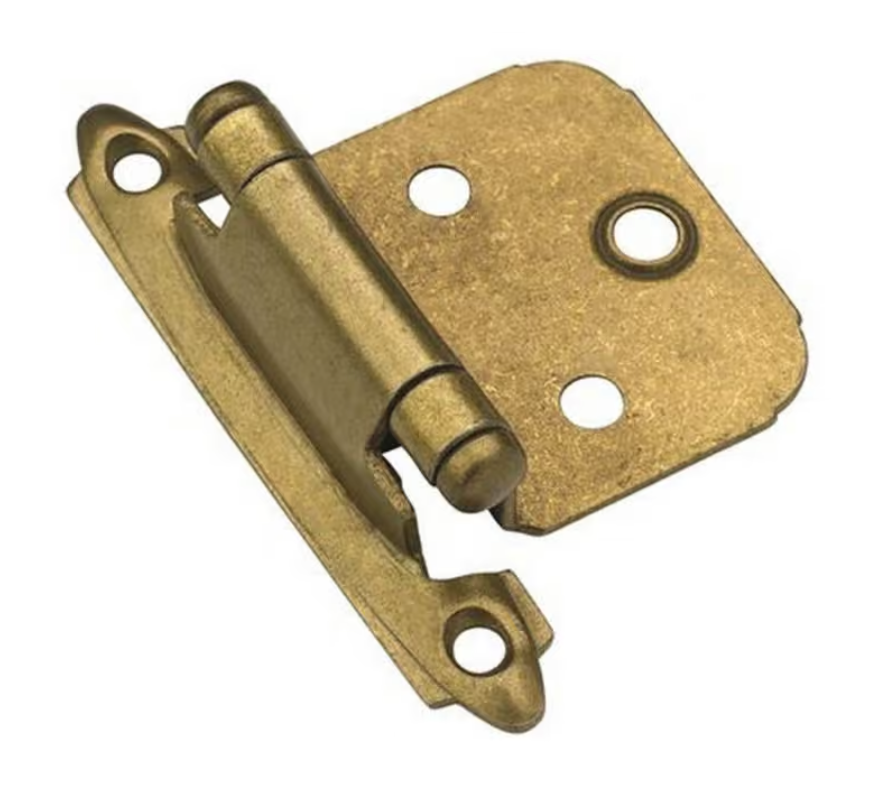
What They Are
A demountable hinge lets the door detach without removing all of the installed hinge hardware.
A face-mount hinge attaches to the face surfaces of the door and cabinet rather than relying on a concealed cup or full mortise.
Both are especially relevant to traditional face-frame cabinets and replacement work.
Best For
- Older face-frame kitchens
- Replacement cabinetry
- Refinishing projects
- Utility cabinets
- Applications where existing mounting holes need to be matched
Advantages
Demountable hinges make door removal convenient. Face-mount hinges can simplify installation and are available in a variety of finishes and overlay configurations.
What to Check Before Buying
Do not replace these hinges by appearance alone. Match the overlay, mounting pattern, screw locations, demountable slot or connection, and finish.
5. Pin, Knife, and Invisible Hinges
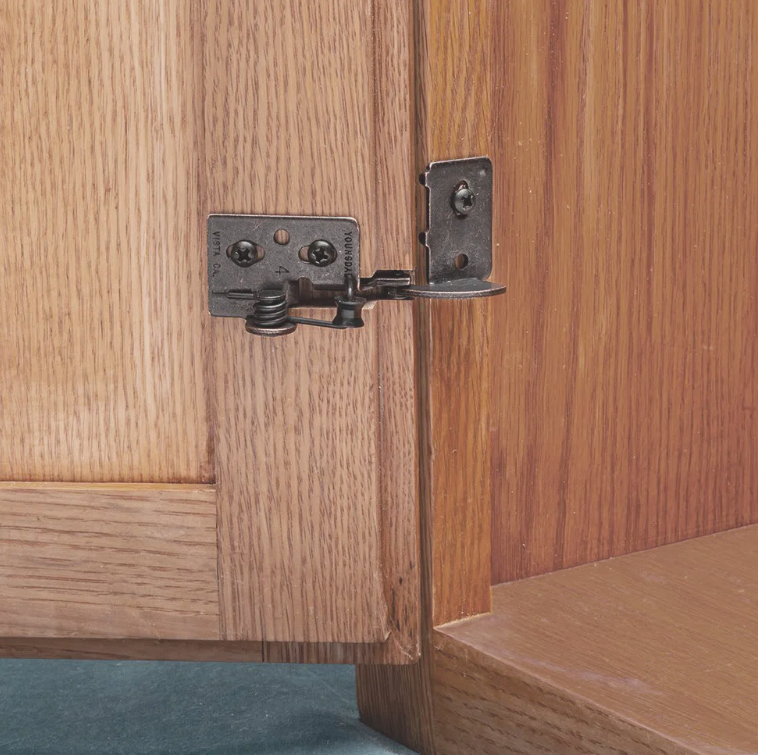
What They Are
Pin, knife, and invisible hinges minimize the visual impact of the hinge.
Knife hinges use slim pivoting leaves, often mortised into the cabinet and door.
Pin or pivot hinges rotate around compact pivot points.
Invisible and recessed hinges hide most or all of the mechanism inside routed or bored pockets.
Best For
- Fine furniture
- Minimalist cabinetry
- Inset doors
- Architectural millwork
- High-end custom cabinetry
Advantages
These hinges provide a cleaner appearance than traditional exposed hardware and can solve applications where a standard cup hinge is not desirable.
Limitations
Installation accuracy matters. Many require routing or mortising and may provide less adjustment than a European concealed hinge.
What to Check Before Buying
Verify door thickness, pivot position, recess dimensions, opening angle, handing, and machining requirements.
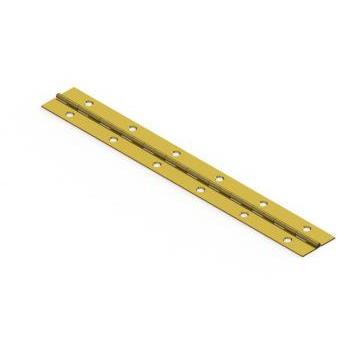
6. Piano or Continuous Hinges
What They Are
A piano hinge runs along most or all of the hinged edge instead of supporting the door or panel at several separate points.
Best For
- Long cabinet doors
- Lids
- Benches
- Access panels
- Folding surfaces
- Commercial fixtures
Advantages
The long hinge distributes support along the joint and can help keep long panels aligned.
Limitations
Piano hinges remain visible in many applications and require fastening along much of their length.
What to Check Before Buying
Confirm length, open width, leaf thickness, material, finish, hole pattern, and environment.
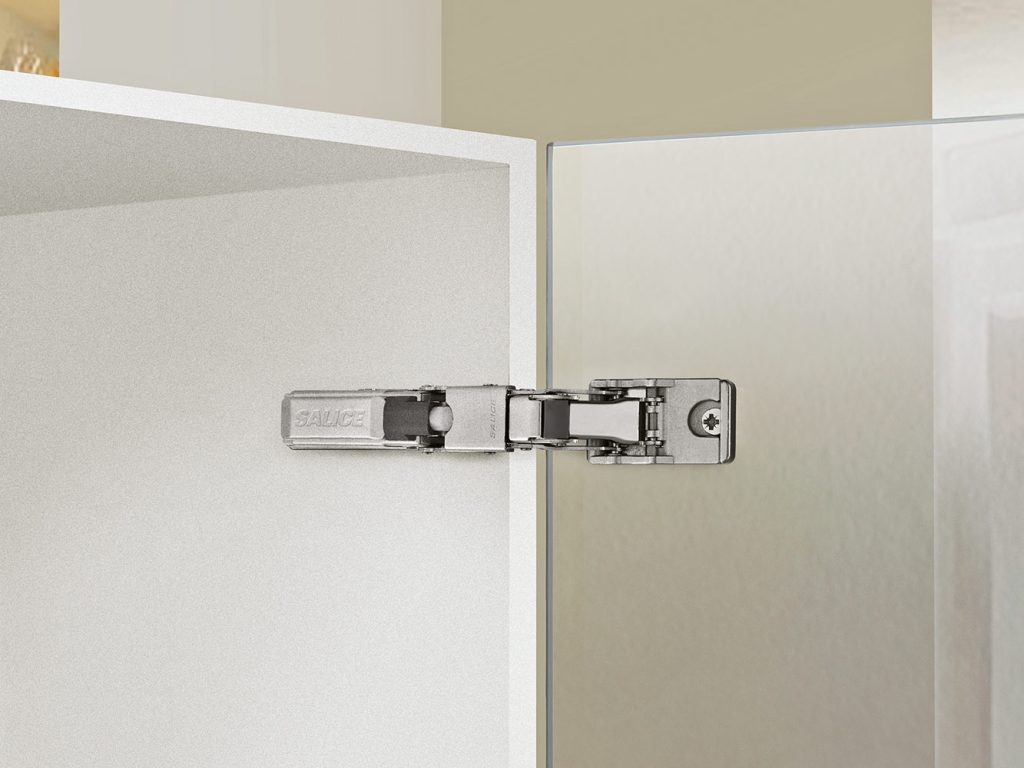
7. Glass-Door Hinges
What They Are
Glass-door hinges are designed to attach cabinet doors made from glass.
Depending on the system, they may clamp onto the glass, use drilled mounting holes, connect through adapters, or use glass-specific concealed hardware.
Best For
- Display cabinets
- Showcases
- Glass kitchen doors
- Retail fixtures
- Furniture
Advantages
They accommodate the mounting and clearance needs of glass instead of adapting hardware intended for wood doors.
What to Check Before Buying
Verify glass thickness, glass preparation, drilling requirements, door weight and dimensions, overlay or inset position, and opening angle.
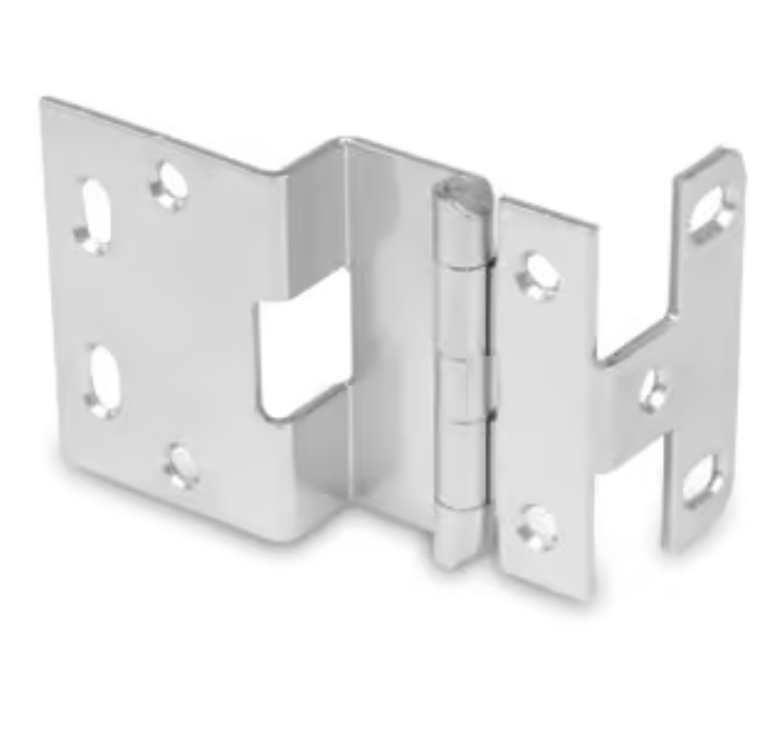
8. Institutional Hinges
What They Are
Institutional hinges are designed for commercial casework and other demanding cabinet applications.
Best For
- Schools
- Healthcare environments
- Laboratories
- Offices
- Public buildings
- High-use commercial casework
Advantages
The category focuses on durability and repeated use for professional cabinet applications.
Limitations
Do not interpret “institutional” or “heavy duty” as a universal load rating. Requirements vary by hinge and manufacturer.
What to Check Before Buying
Confirm door material, dimensions, weight, fastening method, cabinet construction, and the manufacturer’s specifications.
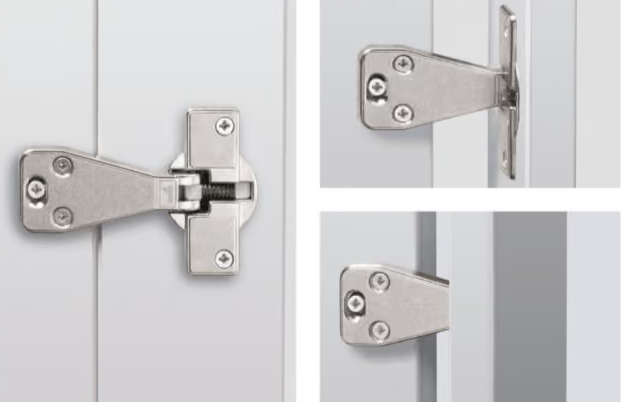
9. Specialty Cabinet Hinges
What They Are
Specialty hinges handle movements or applications that do not fit the major groups above.
Examples include:
- Flap hinges
- Drop-lid hinges
- Lift-off hinges
- Spring hinges
- Pivot hardware
- Folding hardware
- Miter hinges
- Tip-out applications
- Other specialty furniture hinges
European angled, blind-corner, thick-door, pie cut, and zero protrusion hinges should remain grouped under European concealed hinges because Würth Baer merchandises them as part of that system. Specialty Hinges is a separate Baer category for other application-specific hardware.
Best For
Custom cabinets, furniture, lids, flaps, unusual door movements, and specialty millwork.
What to Check Before Buying
Start with the exact movement you need. Then confirm mounting position, door dimensions, weight, clearances, and manufacturer instructions.
Cabinet Hinge Comparison Table
| Hinge Type | Common Cabinet or Application | Concealed? | Soft-Close Available? | Typical Use |
|---|---|---|---|---|
| European concealed | Frameless and compatible face-frame cabinets | Yes | Yes | Modern cabinetry |
| Face-frame | Face-frame cabinets | Yes or partly | Yes | Kitchens and built-ins |
| Butt, mortise, and non-mortise | Furniture and traditional cabinetry | No | Usually no | Inset and traditional doors |
| Demountable and face-mount | Face-frame cabinets | Usually no | Varies | Replacement cabinetry |
| Pin, knife, and invisible | Furniture and specialty cabinets | Mostly | Varies | Minimalist applications |
| Piano or continuous | Long panels, doors, and lids | No | No | Continuous support |
| Glass-door | Glass cabinetry | Varies | Some systems | Display cabinets and glass fronts |
| Institutional | Commercial casework | Varies | Varies | High-use cabinets |
| Specialty | Application-specific cabinetry | Varies | Varies | Flaps, lids, and custom movement |
Inset vs Overlay Cabinet Hinges
Inset hinges position a door inside the cabinet opening. Overlay hinges position the door in front of the opening so it covers part of the cabinet structure.
The difference changes more than appearance. It changes hinge arm geometry, cup position, mounting plate selection, clearances, and the path the door follows as it opens.
| Factor | Inset Door | Overlay Door |
|---|---|---|
| Closed position | Inside cabinet opening | In front of cabinet opening |
| Visible cabinet material | Reveal surrounds door | Door covers cabinet edge or frame |
| Alignment | Reveal is highly visible | Overlay dimension is critical |
| Hinge geometry | Must move door from inside opening | Must position door over mounting surface |
| Replacement | Match inset application | Match required overlay |
Inset designs are common in furniture and traditional face-frame cabinetry, but concealed inset hinges also work with frameless construction. Overlay doors are widespread in both face-frame and frameless cabinets.
You usually cannot substitute an overlay hinge for an inset hinge simply because the cup fits the same hole. The hinge arm and mounting geometry may be different.
Full Overlay vs Half Overlay vs Partial Overlay
These terms describe different ways an overlay door relates to the cabinet.
Full Overlay
A full-overlay door covers most of the cabinet edge or panel allocated to that door. Frameless cabinets often use this approach to create narrow reveals.
“Full overlay” is a configuration, not one universal measurement.
Half Overlay
Half overlay usually refers to a European hinge application where two doors share one center partition. Each door needs enough offset to occupy part of that shared panel.
Manufacturers may use different hinge cranks and plates to create this geometry.
Partial Overlay
Partial overlay is a broader term. It usually means the door covers only part of a face frame or cabinet surface, leaving more of it visible.
In North American face-frame cabinetry, partial overlays are often specified by the actual overlay dimension.
Are Partial Overlay and Half Overlay the Same?
No. Partial overlay describes a door covering only part of the cabinet face or frame. Half overlay is a specific hinge application commonly associated with two doors sharing a frameless partition.
Which One Do I Need?
Use this sequence:
- Identify face-frame or frameless construction.
- Identify which panel or frame member the door covers.
- Measure the overlay.
- Determine whether another door shares the same partition.
- Match the application to the hinge manufacturer’s technical drawing.
Face Frame vs Frameless Cabinet Hinges
Face-frame hinges attach to or account for a front cabinet frame. Frameless hinges typically use mounting plates attached directly to the cabinet side panel.
| Factor | Face-Frame Hinge | Frameless Hinge |
|---|---|---|
| Primary cabinet structure | Front frame | Cabinet side panel |
| Plate location | Frame or adapter | Side panel |
| Overlay | Often specified against frame | Based on side or shared partition |
| Common systems | Compact concealed, adapters, traditional | European concealed |
| Replacement priority | Match frame mount and overlay | Match plate, arm, and drilling system |
Identify cabinet construction before shopping. Otherwise, even a correct cup diameter and opening angle can leave you with a hinge that cannot mount properly.
Soft-Close vs Self-Close Hinges
A self-closing hinge helps pull the door into the closed position. A soft-close hinge controls the final closing movement so the door slows before it shuts. Some hinges combine both functions.
| Factor | Soft-Close | Self-Close |
|---|---|---|
| Main function | Controls closing speed | Pulls door closed |
| Noise reduction | Usually strong | Not necessarily |
| Closing feel | Slower and controlled | Spring-assisted |
| Common applications | Kitchens, baths, furniture | General cabinetry |
| Upgrade issue | Must match existing geometry | Must match existing geometry |
Do not use the terms interchangeably when ordering. Check the product’s listed motion technology.
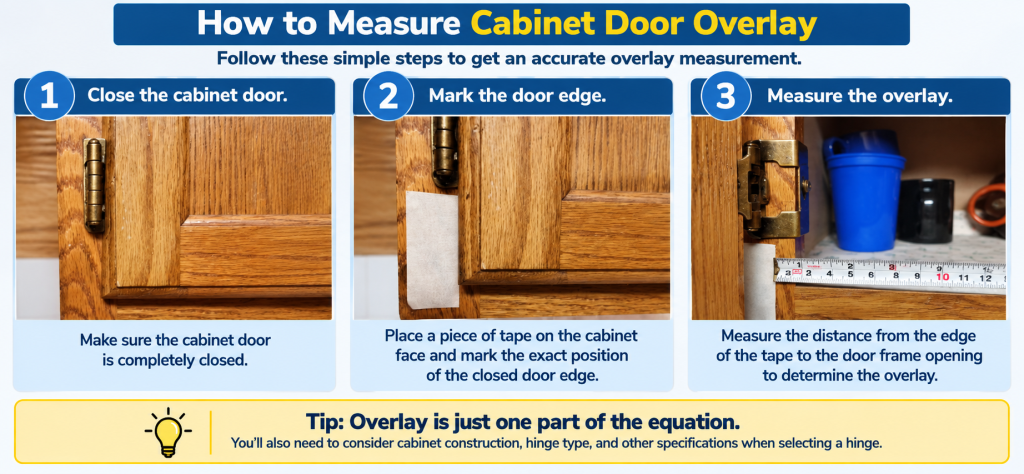
How to Measure Cabinet Hinge Overlay
Cabinet overlay is the amount a closed door covers the cabinet frame or cabinet side. Accurate overlay measurement helps determine the correct hinge geometry.
How to Measure an Existing Overlay Door
- Close the cabinet door.
- Mark the door edge position. Apply painter’s tape to the frame or cabinet surface beside the door and mark the edge.
- Open the door.
- Measure from the inside edge of the cabinet opening or relevant frame edge to your mark.
- Record the measurement for the hinge side.
- Repeat if the cabinet construction is unusual or the reveal looks uneven.
For face-frame cabinets, make sure you measure relative to the actual frame member the door overlaps.
For a new cabinet, use the cabinet and door dimensions to calculate the intended overlay, then confirm that result against the hinge manufacturer’s application table.
Do not choose a hinge from the overlay measurement alone. Door thickness, cup position, plate height, and hinge geometry also affect the finished position.
What Is a 35mm Cabinet Hinge?
A 35mm cabinet hinge usually refers to a concealed hinge with a 35 mm diameter cup bored into the back of the cabinet door. It does not mean every 35 mm hinge is interchangeable.
The cup is only one part of the system.
For example, a current Hettich Sensys 110° hinge uses a 35 mm cup, but the listed product also specifies cup depth, drilling pattern, door-thickness range, adjustment, and mounting details. Salice also offers 35 mm cup hinges with different cup depths, door requirements, opening angles, and mounting plates.
When replacing a 35 mm hinge, check:
- Cup diameter
- Cup depth
- Distance from cup to door edge
- Screw or dowel bore pattern
- Door thickness
- Overlay or inset application
- Hinge arm geometry
- Mounting plate
- Plate height
- Opening angle
- Soft-close or self-close function
- Manufacturer and product family
A 35 mm hole tells you where to start. It does not identify the complete hinge.
Cabinet Hinge Opening Angles
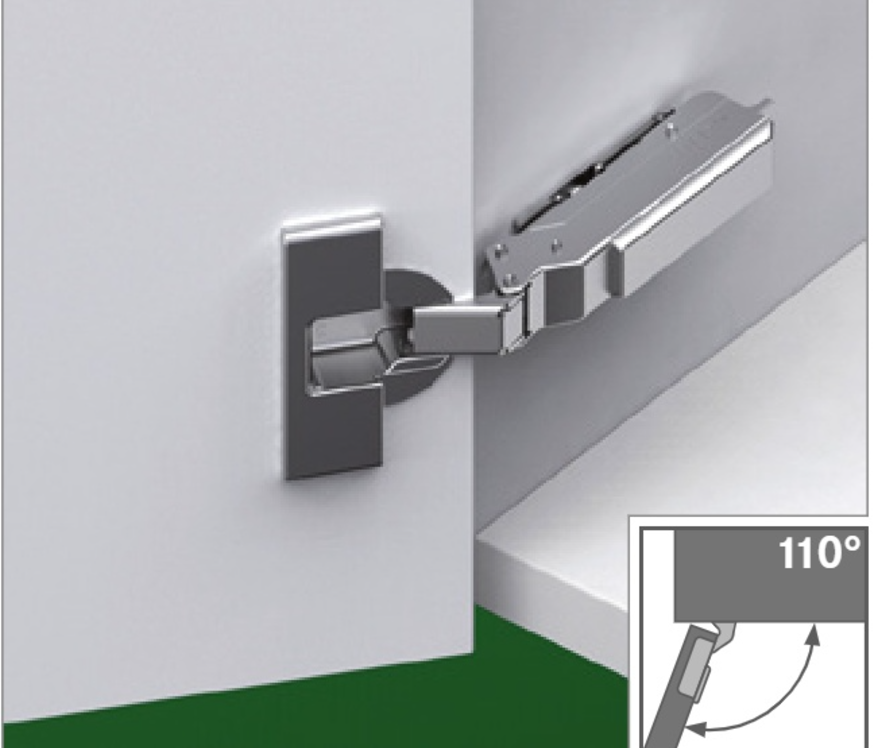
Opening angle tells you how far the cabinet door can swing.
A standard opening angle works for many cabinet doors. Wider-opening hinges can improve access when the cabinet contains pull-outs, interior drawers, or corner storage.
110° vs 155° Cabinet Hinges
A 110° hinge works for many standard cabinet doors.
A 155° hinge opens farther and can provide additional clearance for interior drawers or pull-outs.
Wider is not always better. A wide-opening door can hit a wall, appliance, neighboring cabinet, or handle.
Always check the exact manufacturer’s application drawing because two hinges with the same listed opening angle may create different clearances.
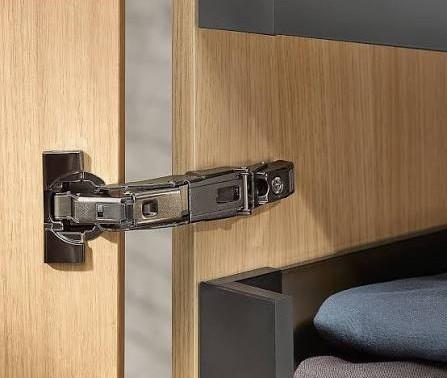
When to Consider Zero Protrusion
If an interior drawer or roll-out needs to move past the open cabinet door, look at zero protrusion hinges.
Würth Baer Supply includes Zero Protrusion Hinges as a dedicated European concealed application, alongside standard, angled, bi-fold, blind-corner, mini, pie cut corner, and thick-door hinges.
How Many Hinges Per Cabinet Door?
The number of hinges depends on door height, width, weight, material, fastening method, and the capacity of the exact hinge system. Larger or heavier doors generally need more hinge support.
Use this process:
- Calculate or weigh the finished door, including attached hardware.
- Measure door height and width.
- Identify door material and thickness.
- Select the exact hinge family.
- Follow that manufacturer’s hinge quantity chart.
- Check any special requirements for wide, tall, heavy, glass, or profiled doors.
For production work, use the current manufacturer documentation for the specific part number.
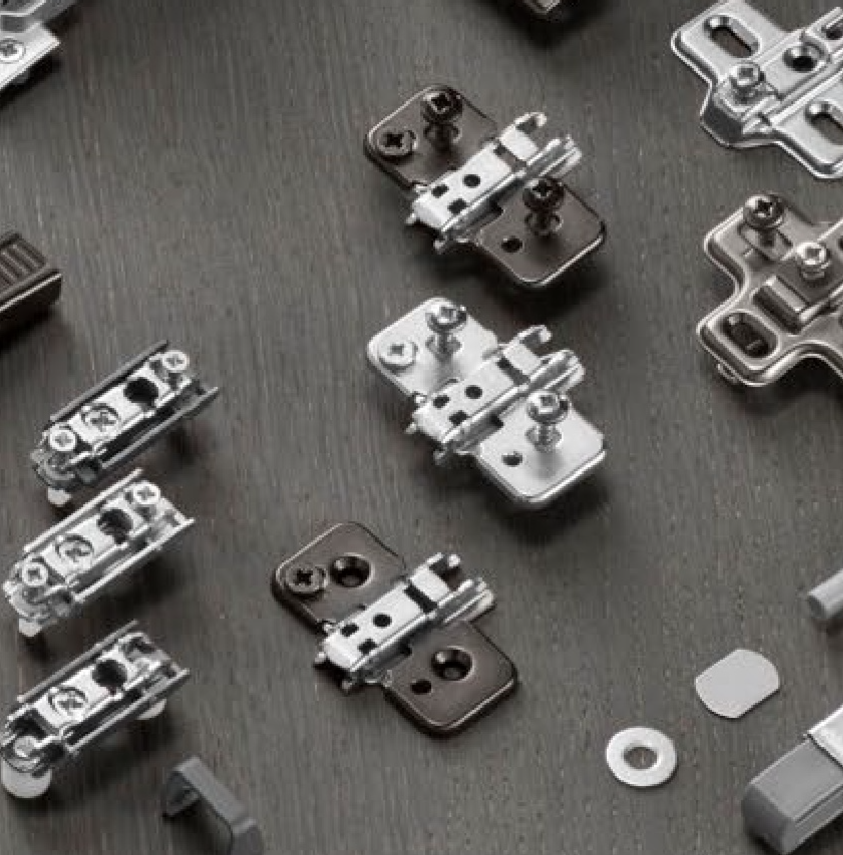
How to Choose a Cabinet Hinge Mounting Plate
The mounting plate connects many European-style hinge arms to the cabinet. Its design and height help establish the final door position.
Selecting the hinge without selecting the correct plate can leave you with an unusable combination.
Würth Baer carries a dedicated hinge base plate category with wing, face-frame adapter, screw-on, and other plate styles from multiple systems.
Check these factors:
Cabinet type: A frameless cabinet often uses a side-panel plate. Face-frame applications may require a dedicated frame plate or adapter.
Plate height: Plate height affects door position and overlay geometry.
Attachment method: Options may include wood screws, Euro screws, dowels, or other manufacturer-specific fasteners.
Adjustment: Some plates provide cam or slotted height adjustment.
Clip compatibility: A clip-on hinge requires the corresponding mounting plate family.
System compatibility: Do not assume a plate from one brand or hinge family will fit another.
When selecting a concealed hinge, confirm the hinge and mounting plate as a system, not as separate generic parts.
Blum vs GRASS vs Salice Hinges
Blum, GRASS, and Salice all offer professional concealed hinge systems. The right choice depends on cabinet construction, door geometry, opening angle, closing technology, existing boring, and the hardware already standardized in the shop.
| Consideration | Blum | GRASS | Salice |
|---|---|---|---|
| Concealed systems | CLIP top, COMPACT and related systems | Tiomos, Nexis, TEC and related systems | Silentia+, Series 100, 200, 700 and others |
| Soft-close | BLUMOTION options | Soft-close options | Silentia+ and other soft-close systems |
| Face-frame options | Yes | Yes, including TEC | Yes |
| Frameless options | Yes | Yes | Yes |
| Wide-angle options | Yes | Yes | Yes |
| Specialty applications | Angled, thick door, blind corner, wide angle and more | Wide angle, thin door, corner, glass and more | Wide angle, angled, blind corner, thick door and more |
| Replacement concern | Match Blum hinge and plate system | Match GRASS family and plate | Match Salice family and plate |
Blum’s current CLIP top BLUMOTION program includes standard, thick-door, blind-corner, angled, and wide-angle applications plus multiple mounting plate types.
GRASS’s 2026 hinge catalog includes Tiomos and Nexis systems with standard, wide-angle, specialty, glass, and other applications. Its TEC line serves face-frame cabinetry.
Salice’s current Silentia+ range includes 105°, 110°, 155°, angled, blind-corner, thick-door, and other configurations with compatible plate systems.
The practical buying question is not “Which brand is best?” It is “Which verified hinge and mounting system fits this door and cabinet?”
That distinction is especially important for replacement work. Existing cup drilling does not guarantee cross-brand compatibility.
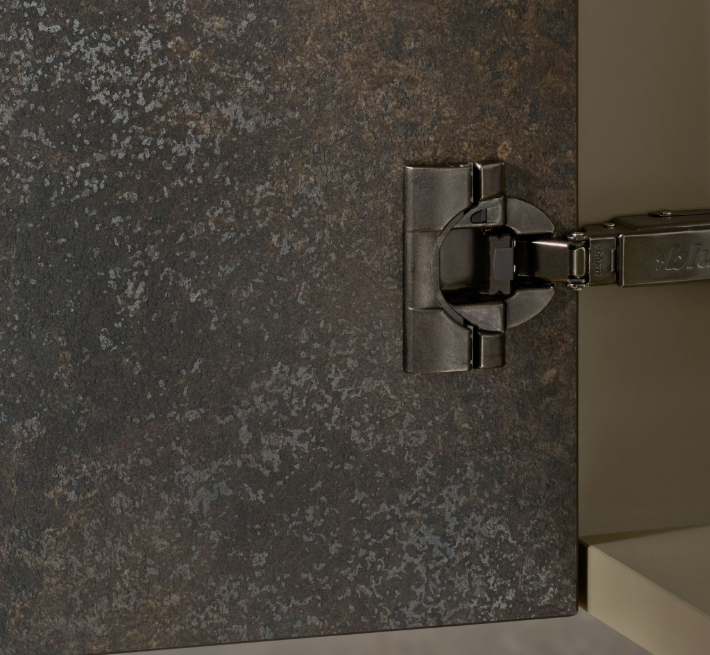
How to Identify an Existing Cabinet Hinge
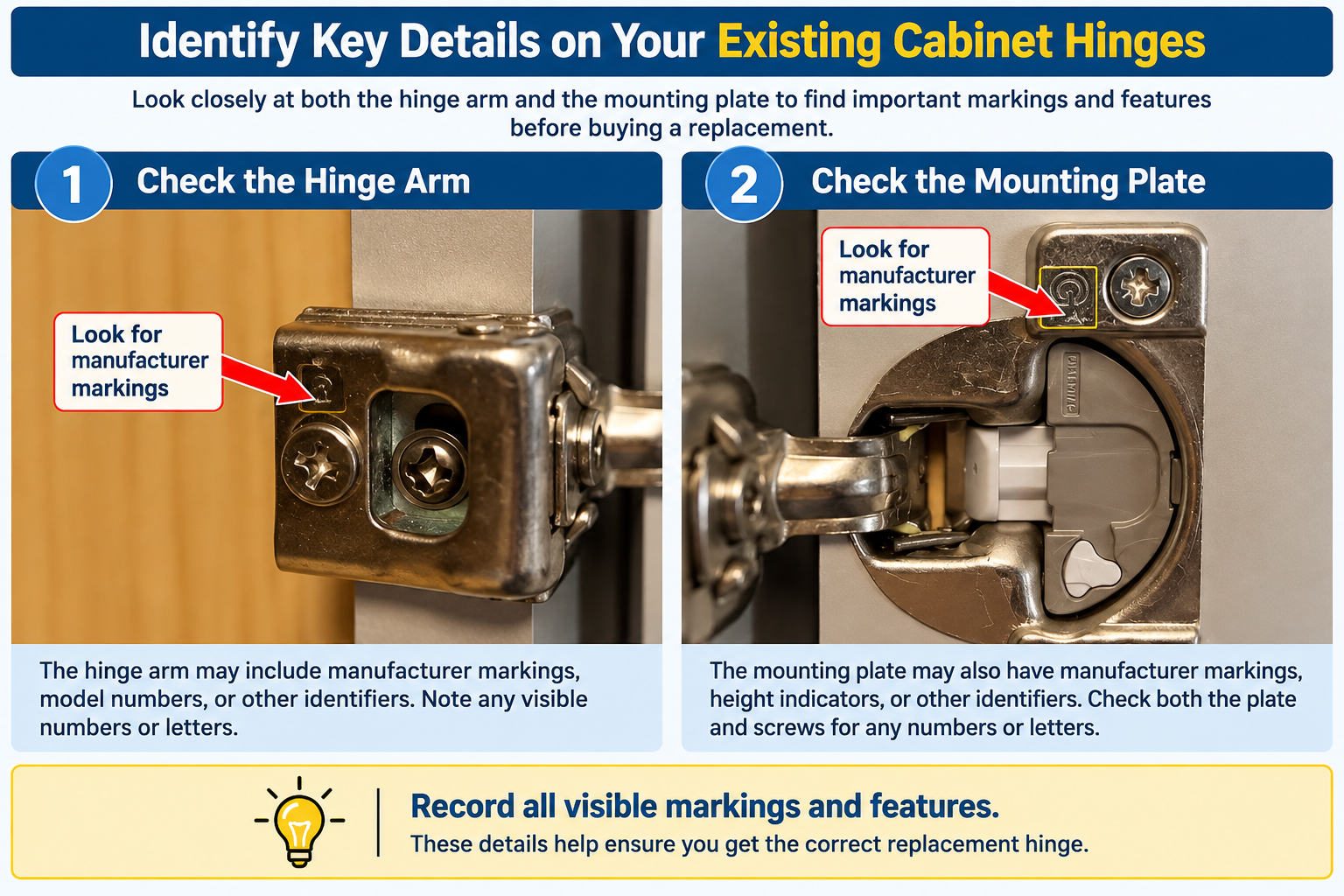
When replacing a cabinet hinge, document the old hardware before ordering anything.
Cabinet Hinge Identification Checklist
- Cabinet construction: Is it face frame or frameless?
- Door position: Is the door inset or overlay?
- Overlay: How much cabinet material does the closed door cover?
- Manufacturer markings: Look for stamped or printed brand names, numbers, and logos.
- Hinge cup diameter: Measure the bored cup hole.
- Screw or bore pattern: Measure the mounting-hole spacing and attachment type.
- Mounting plate: Record the plate type, height, and attachment method.
- Opening angle: Identify the intended door swing when possible.
- Closing mechanism: Is it soft-close, self-close, or free-swing?
- Door thickness: Measure the door rather than assuming it is standard.
Take clear photos before removing the old hinge. Include the hinge arm, cup, mounting plate, markings, cabinet construction, and door position.
Matching only the shape of the metal is unreliable.
Common Cabinet Hinge Buying Mistakes
Ordering by appearance alone. Concealed hinges can look almost identical while using different geometry.
Ignoring cabinet construction. A hinge intended for a frameless side panel may not attach correctly to a face frame.
Measuring overlay incorrectly. A small overlay error can change door position and reveal.
Assuming all 35 mm hinges are interchangeable. Cup diameter does not confirm cup depth, bore pattern, plate, overlay, or opening geometry.
Forgetting the mounting plate. Some concealed hinges require a separate plate, and that plate affects the application.
Choosing the wrong opening angle. A door may block an interior drawer or hit an adjacent wall.
Ignoring door weight and dimensions. Hinge quantity and hinge type depend on the complete door.
Mixing incompatible hinge and mounting plate systems. Clip interfaces and dimensions are not automatically cross-brand.
Assuming soft-close means self-close. Damping and closing force are different functions.
Replacing a hinge without checking bore patterns. A new cup may fit the main hole while its screws or dowels do not match the existing drilling.
How to Choose the Right Cabinet Hinge
Use this nine-step process to narrow hundreds of hinge options to the right system.
Step 1: Identify Your Cabinet Construction
Is the cabinet face frame or frameless?
Step 2: Identify the Door Position
Is the closed door inset or overlay?
Step 3: Measure the Overlay
For an overlay door, determine how much of the mounting surface the door covers.
Step 4: Check Door Size and Weight
Measure height, width, thickness, and finished weight. Include glass, mirrors, applied panels, and heavy handles where relevant.
Step 5: Choose the Closing Function
Select soft-close, self-close, free-swing, or another motion system.
Step 6: Determine Opening Angle
Decide whether standard access is enough or whether pull-outs, interior drawers, or cabinet geometry require a wider angle.
Step 7: Confirm Cup and Bore Requirements
For European hinges, check cup diameter, depth, setback, screw pattern, and dowel pattern.
Step 8: Match the Mounting Plate
Confirm plate height, installation method, cabinet type, and hinge-family compatibility.
Step 9: Check Manufacturer Specifications
Compare the complete application against the latest technical sheet before ordering.
Würth Baer’s main hinge category allows buyers to move from the application decision into European concealed, face-frame, specialty, glass, piano, knife, institutional, base plate, and accessory categories.
Cabinet Hinge FAQs
What are the most common types of cabinet hinges?
Common cabinet hinge types include European concealed hinges, face-frame hinges, full-overlay hinges, partial-overlay hinges, half-overlay hinges, inset hinges, soft-close hinges, self-closing hinges, butt hinges, piano hinges, knife hinges, glass-door hinges, and specialty hinges.
How do I know what type of cabinet hinge I need?
First identify whether the cabinet is face frame or frameless. Then determine whether the door is inset or overlay, measure the overlay if needed, and confirm door thickness, opening angle, closing function, cup drilling, and mounting plate.
What is the difference between overlay and inset hinges?
An overlay hinge positions the door in front of the cabinet opening. An inset hinge positions the door inside the opening. The different door positions require different hinge geometry.
What does full overlay mean on a cabinet hinge?
Full overlay means the door covers most of the cabinet edge or frame area assigned to that door. The exact overlay dimension depends on the hinge, plate, cabinet, and door design.
What is a half-overlay hinge?
A half-overlay hinge is commonly used when two doors share one center partition on a frameless cabinet. Its geometry lets both doors occupy the shared panel while maintaining a reveal between them.
Are partial-overlay and half-overlay hinges the same?
No. Partial overlay is a broad description for a door that covers only part of a cabinet face or frame. Half overlay usually describes a specific European hinge application for doors sharing a partition.
What is a European cabinet hinge?
A European cabinet hinge is a concealed hinge mounted inside the cabinet. Many use a bored cup in the door plus a hinge arm and mounting plate, with adjustable overlay and alignment.
What does 35mm mean on a cabinet hinge?
35mm normally refers to the diameter of the circular hinge cup bored into the back of the door. It does not identify the opening angle, bore pattern, cup depth, overlay, or mounting plate.
Can I replace regular cabinet hinges with soft-close hinges?
Often, but the replacement hinge must fit the cabinet construction, door position, overlay, door thickness, and drilling. A soft-close feature alone does not guarantee compatibility.
What is the difference between soft-close and self-close hinges?
Self-close helps pull the door shut. Soft-close slows the final closing movement. Some hinges provide both functions.
Can you put European hinges on face-frame cabinets?
Yes. Manufacturers offer concealed hinges specifically for face-frame cabinetry and European-style systems with compatible face-frame mounting hardware.
How do I measure cabinet hinge overlay?
Close the door, mark its edge on the cabinet or face frame, open it, and measure from the relevant cabinet-opening edge to the mark. Then verify the measurement using the hinge manufacturer’s application chart.
What opening angle cabinet hinge do I need?
A standard-opening hinge works for many cabinet doors. Choose a wider angle when interior drawers, pull-outs, pantry access, or cabinet geometry require the door to move farther out of the opening.
What is the difference between a 110° and 155° hinge?
A 155° hinge opens much farther than a 110° hinge. The extra travel can help clear interior drawers and pull-outs, but exact clearances vary by manufacturer and model.
How many hinges should a cabinet door have?
It depends on the door’s height, width, weight, material, fastening, and the specific hinge. Use the manufacturer’s hinge quantity chart instead of applying one universal rule.
Are Blum, GRASS, and Salice hinges interchangeable?
Do not assume they are. Even when hinges share a 35 mm cup, their mounting plates, bore patterns, cup depths, overlays, attachment systems, and geometry may differ.
Can I replace a cabinet hinge with another brand?
Sometimes, but verify every important dimension and application requirement. For the lowest-risk replacement, identify the original manufacturer and part family first.
What hinges are best for inset cabinets?
Use hinges specifically engineered for the cabinet’s inset application. Concealed inset hinges work well when hidden hardware and adjustment are priorities. Traditional butt, knife, or other hinges may suit furniture and period cabinetry.
What hinges are best for frameless cabinets?
European concealed hinges are the standard starting point for many frameless applications because they mount efficiently to the cabinet side and support multiple overlay, inset, adjustment, and opening-angle configurations.
What hinges are used on kitchen cabinets?
Modern kitchen cabinets commonly use concealed European or compact concealed hinges. The correct version depends on whether the cabinet is face frame or frameless and whether the door is inset, full overlay, partial overlay, or half overlay.
Final Takeaway: Types of Cabinet Hinges
Choosing the right cabinet hinge becomes much easier when you separate hinge type, door configuration, and hinge features.
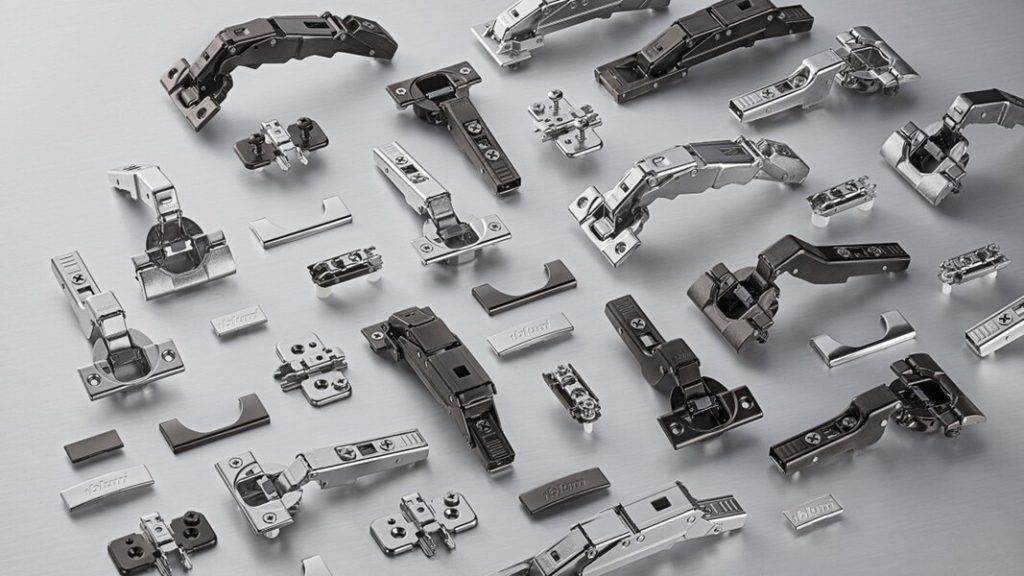
First identify the main hinge family. For most modern cabinets, that means a European concealed or face-frame hinge. Traditional and specialty applications may call for butt, mortise, demountable, knife, piano, glass, institutional, or specialty hinges.
Next identify whether the door is inset or overlay and measure the overlay where needed.
Finally, choose the required soft-close function, opening angle, drilling, mounting plate, and other specifications.
When selecting a concealed hinge, confirm the cabinet construction, overlay, opening angle, door thickness, and mounting plate before ordering.