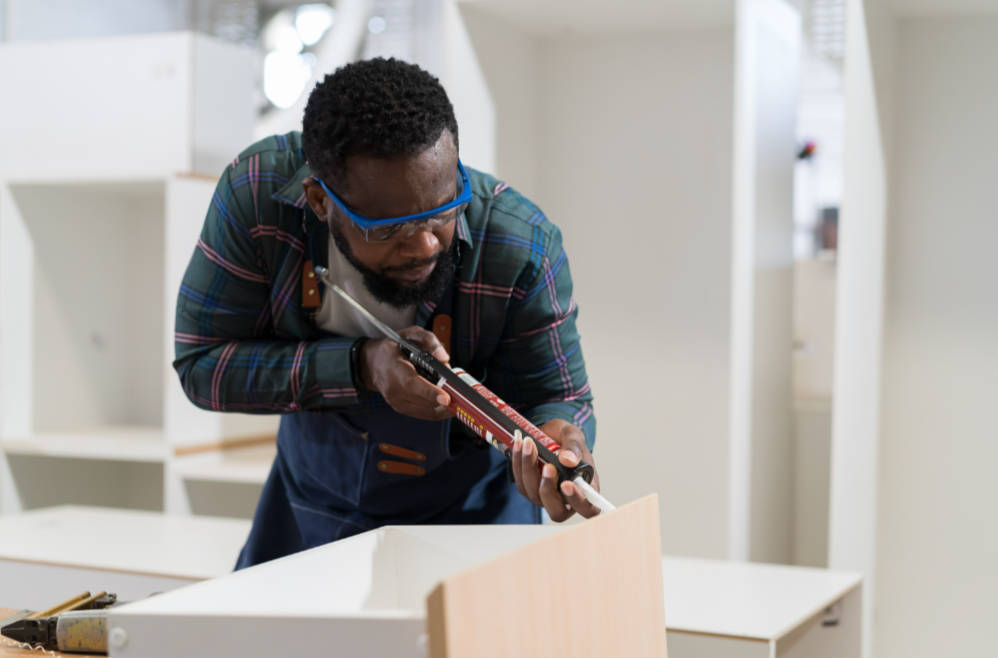

The best wood glue for professional woodworking depends on the application.
Titebond III Ultimate is the best choice for exterior projects, Titebond Original works well for interior woodworking, and Titebond II Premium offers the best overall value for shops that need one versatile glue for many jobs.
Specialty applications call for more specific formulas. Use Titebond Speed Set when clamp time matters, Titebond Melamine Glue for melamine panels, Titebond Doweling Glue for dowel insertion, Titebond Cold Press Veneer Glue for veneer work, and Titebond Quick & Thick for vertical or overhead applications.
The right choice comes down to moisture exposure, substrate, set time, viscosity, and application method. The guide below compares eight professional wood glues by use case so you can quickly match the adhesive to the job.
Quick Skim: Best Wood Glues by Application
| Best For | Our Pick | Applications | Why It Stands Out |
|---|---|---|---|
| Exterior projects | Titebond III Ultimate Wood Glue | Outdoor furniture, planters, birdhouses, cutting boards | Strong, tough PVA formula that passes ANSI/HPVA Type I waterproof specifications |
| Interior projects | Titebond Original Wood Glue | General woodworking, cabinets, furniture, casework | Proven industry standard with excellent strength, short clamp time, and strong sandability |
| Best value | Titebond II Premium Wood Glue | Interior and exterior woodworking applications | Strong, water-resistant, fast-setting formula suited to a wide range of jobs |
| Fastest set time | Titebond Speed Set | General woodworking and assembly-line operations | 15-minute clamp time helps speed production |
| Melamine | Titebond Melamine Glue | Melamine to wood, MDF, or particleboard | Thick formula reduces mess and performs well at elevated temperatures |
| Doweling applications | Titebond Doweling & Doweling LV Wood Glue | Dowel insertion, including automated equipment | Lower viscosity supports easy flow, fast set times, and strong bonds |
| Wood veneers | Titebond Cold Press Veneer Glue | Wood veneer to wood-based substrates | Economical alternative to contact cement that will not bleed through |
| Vertical applications | Titebond Quick & Thick Multi-Surface Glue | Trim, moldings, miter joints, overhead projects | Three times thicker and twice as fast, with less running and shorter clamp times |
1. Titebond III Ultimate Wood Glue: Best for Exterior Projects
Best for: Outdoor furniture, planters, birdhouses, cutting boards, and other projects exposed to moisture.
Exterior woodworking requires more than a strong bond. The adhesive also needs to handle water exposure without becoming the weak point in the assembly.
Titebond III Ultimate Wood Glue is a strong choice for outdoor work because it passes the ANSI/HPVA Type I waterproof specification. It combines high bond strength with the water resistance needed for demanding woodworking applications.
That makes it well suited to outdoor furniture and projects that may face rain, humidity, or frequent cleaning.
Why It Stands Out
Titebond III is one of the strongest and toughest PVA wood glues in the Titebond lineup. Its waterproof performance also gives professional shops more flexibility when building products for indoor or outdoor use.
Choose Titebond III when: The finished project will face regular moisture or exterior conditions.
Consider another glue when: The job will stay indoors and does not require waterproof performance.
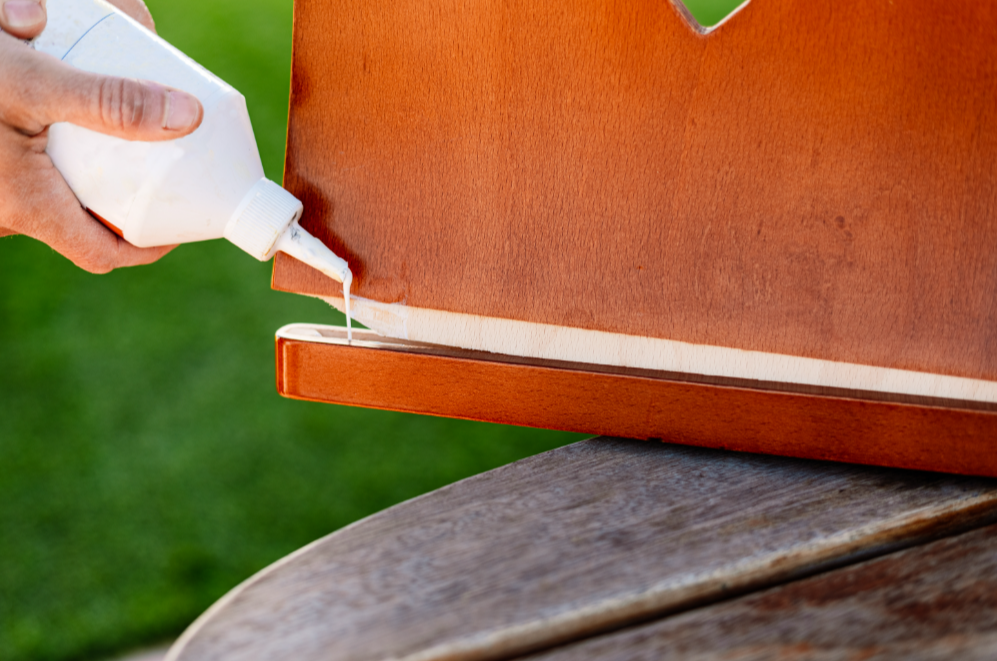
2. Titebond Original Wood Glue: Best for Interior Projects
Best for: General woodworking, cabinets, furniture, casework, and other interior assemblies.
For standard interior woodworking, Titebond Original Wood Glue remains a practical professional choice.
It has been an industry leader for more than 80 years and works well across many common cabinet, furniture, and casework applications.
The formula combines strong bonding performance with short clamp times and good sandability. Those qualities matter in production environments where parts need to move efficiently from assembly to sanding and finishing.
Why It Stands Out
Titebond Original does the core job well without adding features that many dry interior applications do not need.
It is simple, proven, and versatile enough for everyday shop use.
Choose Titebond Original when: You need a dependable adhesive for interior wood-to-wood assembly.
Consider another glue when: The project needs added water resistance or specialty performance.
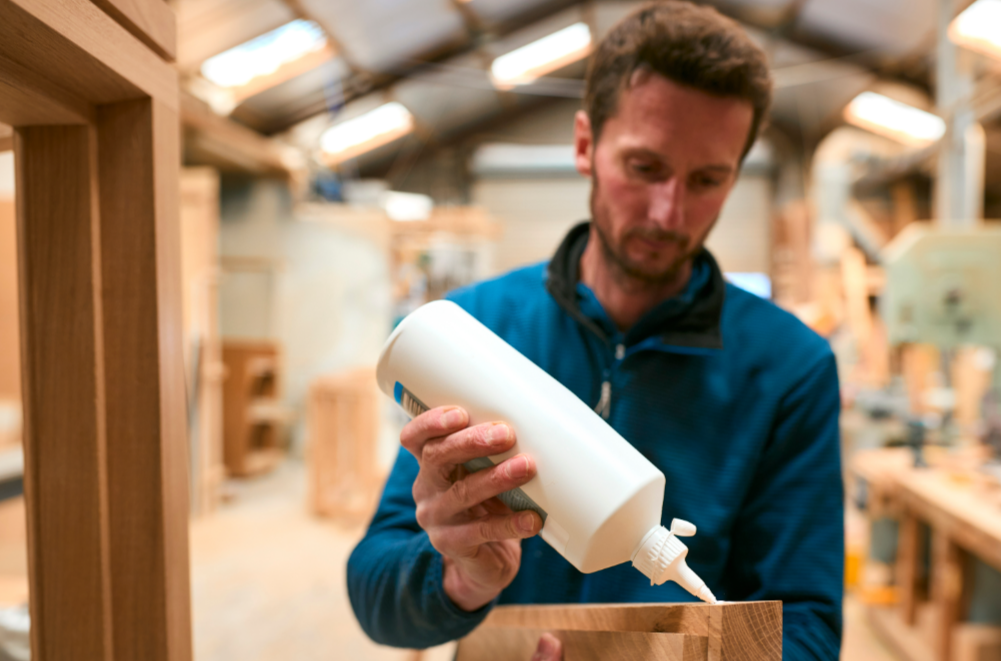
3. Titebond II Premium Wood Glue: Best Value
Best for: Shops that want one glue for a wide range of interior and exterior woodworking applications.
If you want one adhesive that can handle most common woodworking jobs, Titebond II Premium is a strong value.
It combines superior strength, water resistance, and a fast set time in a versatile PVA formula.
That balance makes it useful for shops that move between cabinet work, furniture, millwork, and projects where occasional moisture exposure is a concern.
Instead of stocking a different general-purpose adhesive for every small variation in the job, many shops can use Titebond II Premium across a broad range of assemblies.
Why It Stands Out
Versatility is the main advantage.
Titebond II Premium gives professional woodworkers a useful combination of strength, moisture resistance, and production-friendly set time without moving into a more specialized adhesive.
Choose Titebond II Premium when: You want a versatile glue that covers a wide range of everyday applications.
Consider another glue when: The project requires full waterproof performance or a specialty formula for melamine, veneer, or automated doweling.
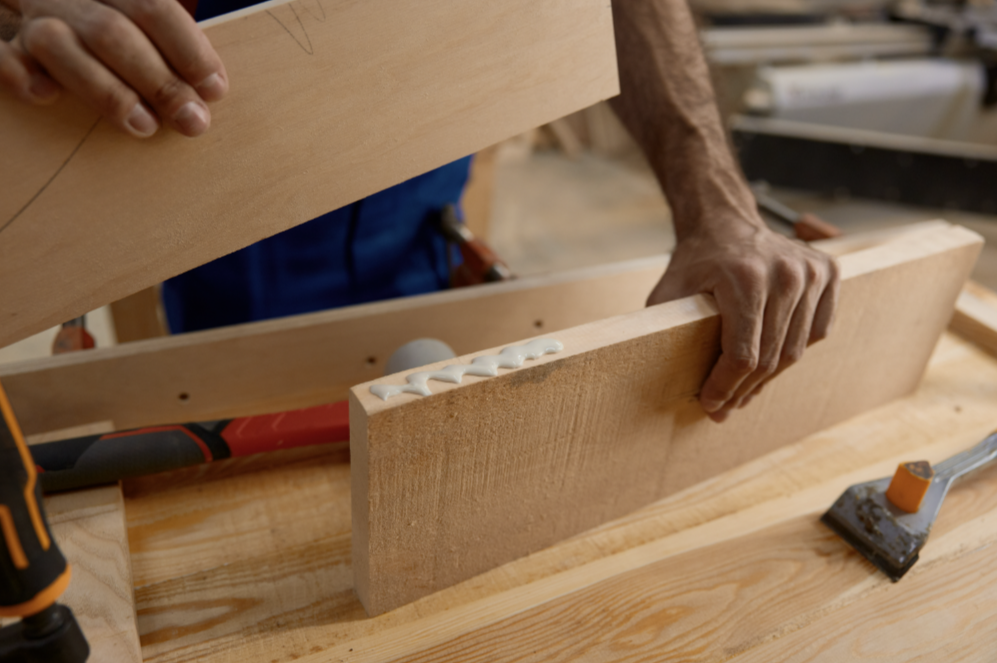
4. Titebond Speed Set: Best for Fast Set Time
Best for: General woodworking, repetitive assembly, and production-line operations.
In a production shop, clamp time can affect throughput.
Titebond Speed Set is designed for applications where assemblies need to move through the shop quickly. Its 15-minute clamp time can help reduce the amount of time parts occupy clamps, fixtures, or assembly stations.
That becomes especially valuable in repetitive production where even small cycle-time reductions add up over a full shift.
Why It Stands Out
The main advantage is speed.
A shorter clamp cycle can help shops keep work moving and make better use of existing clamps and workstations.
Choose Titebond Speed Set when: Production speed and shorter clamp cycles are priorities.
Consider another glue when: You need more working time to position a complicated assembly.
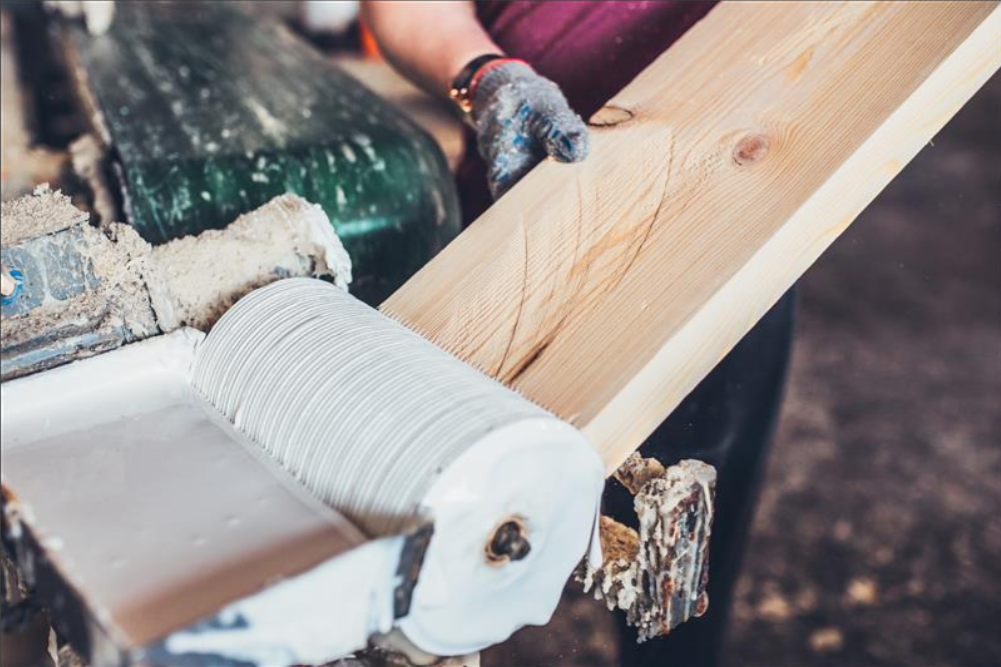
5. Titebond Melamine Glue: Best for Melamine
Best for: Bonding melamine to wood, MDF, or particleboard.
Melamine creates a bonding challenge because its smooth, nonporous surface does not behave like raw wood.
Titebond Melamine Glue is formulated specifically for jobs that combine melamine with common woodworking substrates such as MDF, particleboard, and wood.
Its thicker consistency helps keep the adhesive where it is applied instead of running across panels or work surfaces. The formula also provides good flow characteristics and performs well in elevated temperatures.
Why It Stands Out
Titebond Melamine Glue is about substrate compatibility.
Rather than using a standard wood glue and hoping it performs well on a difficult surface, shops can use a formula designed for melamine-based assemblies.
The adhesive is also about twice as thick as standard wood glue, which can help reduce drips and mess during application.
Choose Titebond Melamine Glue when: You are bonding melamine to MDF, particleboard, or wood.
Consider another glue when: Both bonding surfaces are unfinished wood.
6. Titebond Doweling & Doweling LV Wood Glue: Best for Doweling Applications
Best for: Dowel insertion, cabinet assembly, furniture production, and automated doweling equipment.
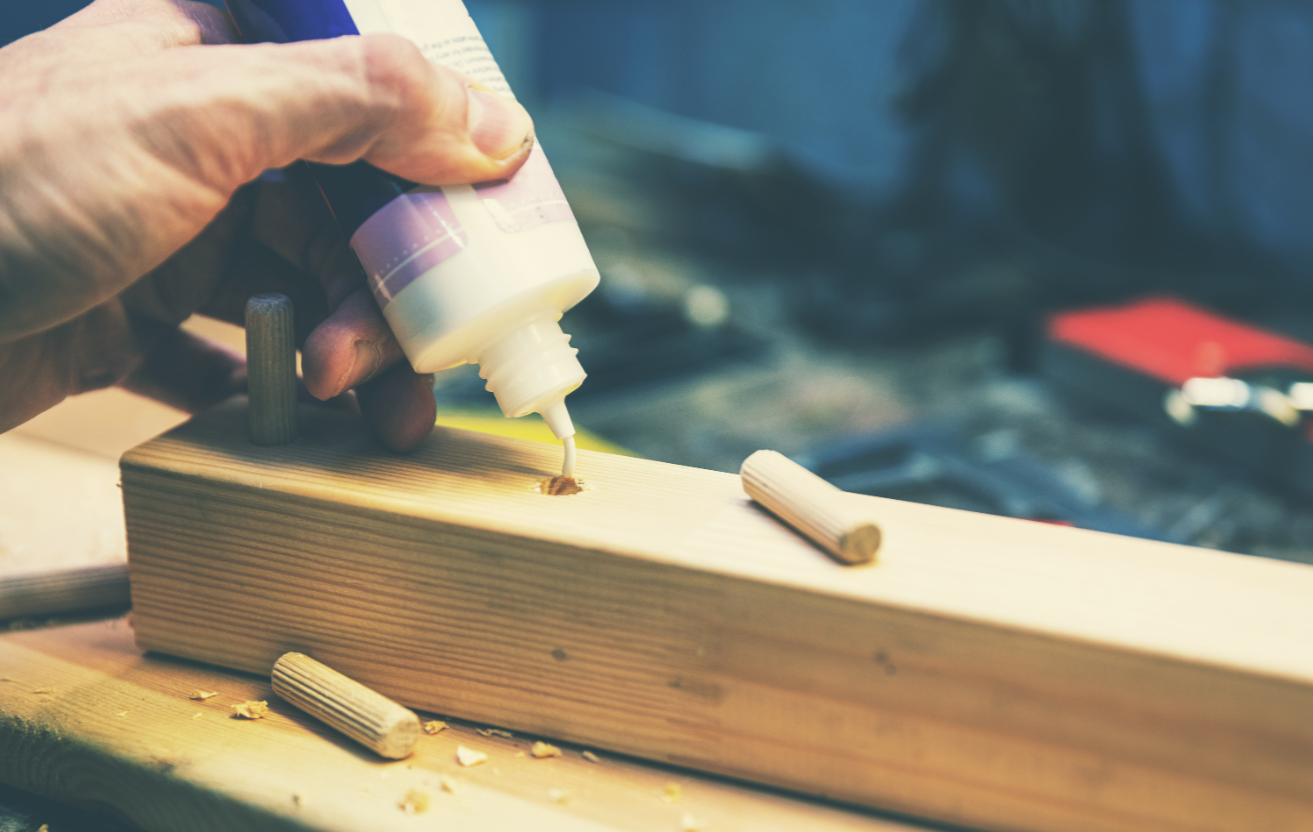
Doweling applications need more than bond strength. The adhesive also needs to flow properly into drilled holes and around the dowel.
Titebond Doweling and Doweling LV Wood Glues are designed for this type of application.
Their lower viscosity makes the adhesive easier to apply in dowel holes and helps support automated dispensing equipment. Fast set times also help keep production moving after the dowels are inserted.
Why It Stands Out
Viscosity makes the difference.
A thick general-purpose glue may be harder to meter through automated equipment or distribute evenly inside a dowel hole. A lower-viscosity doweling adhesive can make application more consistent.
That can improve both efficiency and repeatability in cabinet and furniture production.
Choose Titebond Doweling Glue when: Dowels are a regular part of your assembly process, especially with automated machinery.
Consider another glue when: You need a thicker adhesive for general hand assembly.
7. Titebond Cold Press Veneer Glue: Best for Wood Veneers
Best for: Bonding wood veneer to wood-based substrates.
Veneer work requires an adhesive that can create a consistent bond without creating problems on the finished face.
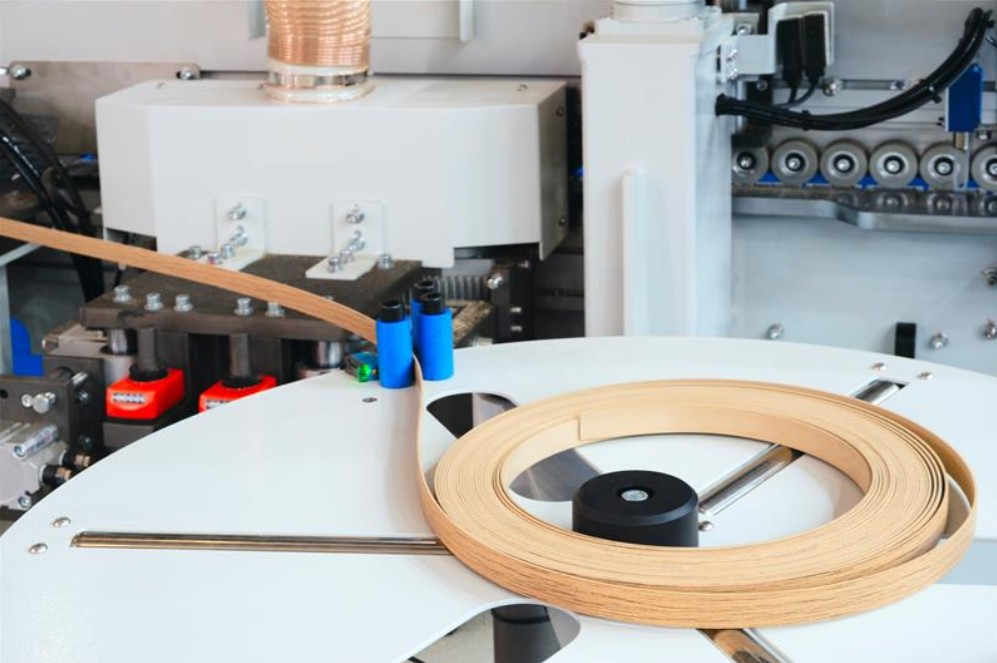
Titebond Cold Press Veneer Glue is made for bonding wood veneers to wood-based substrates. It provides a practical alternative to contact cement for shops using cold-press veneer processes.
One of its biggest advantages is that it will not bleed through the veneer.
That matters because adhesive bleed-through can create visible defects and complicate later sanding or finishing.
Why It Stands Out
Titebond Cold Press Veneer Glue gives shops a purpose-built adhesive for veneer work while remaining an economical option compared with many contact cement systems.
Its resistance to bleed-through can also help protect the appearance of thin or decorative veneers.
Choose Titebond Cold Press Veneer Glue when: You are pressing wood veneer onto MDF, particleboard, plywood, or another wood-based substrate.
Consider another glue when: The job involves standard solid-wood joinery rather than veneer lamination.
8. Titebond Quick & Thick Multi-Surface Glue: Best for Vertical Applications
Best for: Trim, moldings, miter joints, overhead work, and other applications where glue runout is a concern.
Standard wood glue can become difficult to control when gravity is working against you.
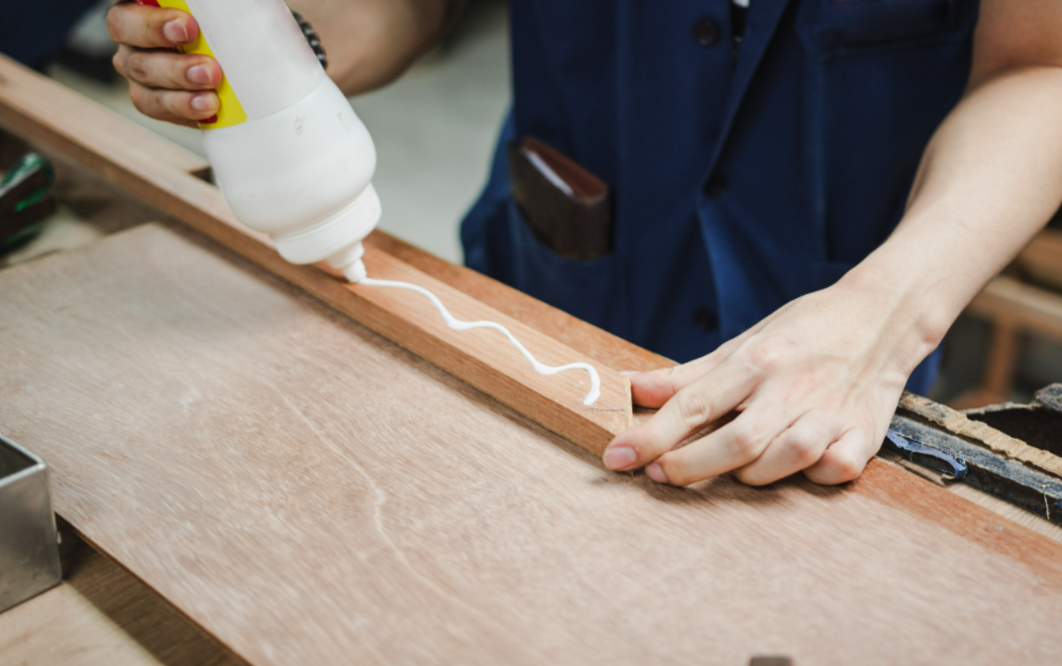
Titebond Quick & Thick Multi-Surface Glue solves that problem with a formula that is about three times thicker than traditional wood glue.
The added body helps the adhesive stay where it is placed on vertical surfaces, trim, moldings, and overhead assemblies.
It also sets about twice as fast, which can reduce clamp time on smaller assembly and installation jobs.
Why It Stands Out
Quick & Thick combines application control with speed.
The thicker formula helps reduce drips and mess, while its faster set helps keep parts in position. It dries clear and can also fill small imperfections between materials.
That makes it especially useful for finish carpentry and detail work where clean application matters.
Choose Titebond Quick & Thick when: You are working vertically, overhead, or with trim and molding that are difficult to clamp.
Consider another glue when: You need a thinner adhesive that can flow into dowel holes or spread over large veneer surfaces.
How to Choose the Best Wood Glue
The strongest glue is not automatically the best glue for every project.
Professional shops should start by matching the adhesive to five practical factors.
1. Where Will the Finished Project Be Used?
Start with moisture exposure.
For dry interior cabinets and furniture, Titebond Original may be all you need.
For a wider range of interior and exterior applications, Titebond II Premium offers added water resistance.
For projects that demand waterproof performance, Titebond III Ultimate is the better fit.
2. What Materials Are You Bonding?
Raw wood is only one substrate found in a professional woodworking shop.
Melamine, MDF, particleboard, veneer, and other engineered materials may require adhesives with different flow, tack, or bonding properties.
For example:
- Use Titebond Melamine Glue for melamine bonded to wood-based substrates.
- Use Titebond Cold Press Veneer Glue for veneer pressing.
- Use Titebond Doweling Glue where low viscosity improves dowel insertion and dispensing.
Choosing by substrate can prevent bonding problems before they reach assembly.
3. How Fast Does the Assembly Need to Move?
Set time matters in production.
A shorter clamp time can reduce bottlenecks, especially when clamps and fixtures are shared across many assemblies.
Titebond Speed Set is the strongest choice in this group when fast clamp release is the main priority.
For less time-sensitive work, a general-purpose formula may provide more flexibility.
4. How Will the Glue Be Applied?
Application method can affect the right adhesive choice.
A lower-viscosity adhesive works well for doweling equipment. A thicker glue works better on vertical surfaces. Veneer pressing benefits from a formula designed to spread evenly across a broad face.
The adhesive should work with your process instead of forcing operators to work around it.
5. Is the Adhesive Solving a Production Problem?
Specialty glues can improve more than bond strength.
They can also help solve problems such as:
- Glue running down vertical parts
- Long clamp cycles
- Poor flow through automated equipment
- Difficulty bonding melamine
- Veneer bleed-through
- Water exposure after installation
That is why professional shops should select glue by application instead of relying on one formula for every job.
Which Wood Glue Is Best for Most Projects?
For shops looking for one versatile adhesive, Titebond II Premium Wood Glue offers the strongest balance of performance and value.
It provides strong bonds, water resistance, and a fast set time while covering both interior and exterior woodworking applications.
However, specialty jobs still benefit from specialty adhesives.
Use Titebond III for demanding exterior exposure, Speed Set for fast production, Melamine Glue for difficult melamine surfaces, Doweling Glue for dowel insertion, Cold Press Veneer Glue for veneer work, and Quick & Thick for vertical assemblies.
Is Wood Glue Stronger Than Wood?
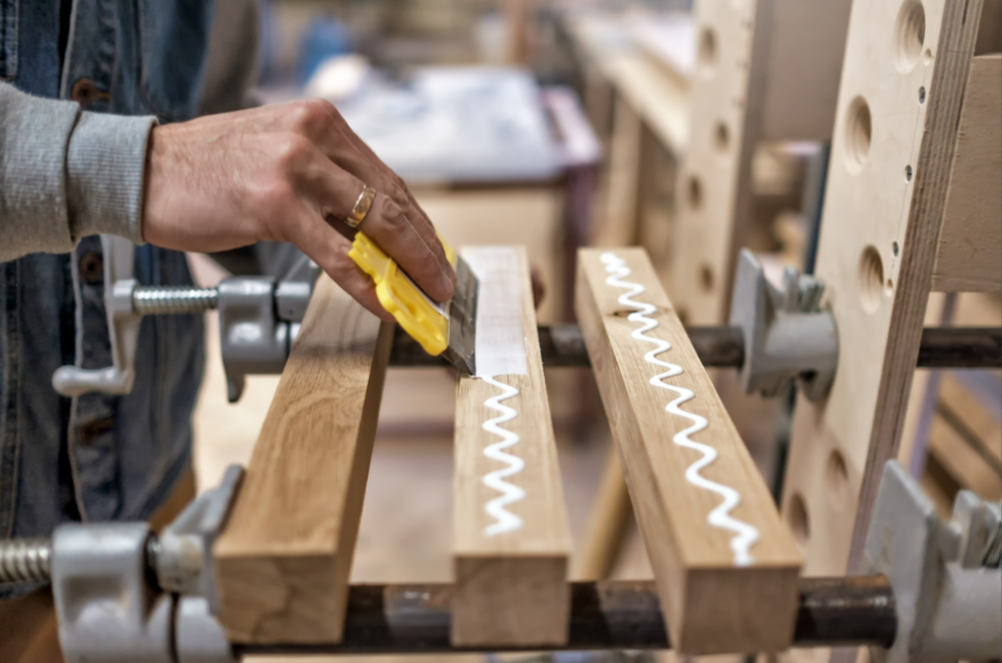
A properly made glue joint can be extremely strong, but adhesive selection is only part of the equation.
Good results also depend on:
- Proper surface preparation
- Good-fitting joints
- Even adhesive coverage
- Correct clamp pressure
- Adequate cure time
- Suitable temperature and shop conditions
A premium glue cannot compensate for a poorly prepared joint.
For the best results, match the adhesive to the material and application, then follow the manufacturer’s application and curing instructions.
Final Takeaway: Best Wood Glue
Professional wood glue selection should support the way your shop actually works. The right adhesive can help reduce clamp bottlenecks, improve consistency, limit rework, and make difficult applications easier to manage.
Instead of choosing by brand name or bond strength alone, match the glue to the material, moisture exposure, assembly speed, and application method. General-purpose PVA glues cover many everyday jobs, while specialty formulas can solve specific production challenges such as melamine bonding, dowel insertion, veneer pressing, and vertical assembly.
For professional shops, that application-first approach makes it easier to get reliable bonds and keep work moving.
Würth Baer Supply carries professional wood glues for cabinetmaking, furniture production, veneer work, assembly, and other woodworking applications.