Should I mark with a pencil or a marking knife?
A pencil line is easy to see and works for rough layout, but its width can throw off a fit. A marking knife cuts a fine line that guides a saw or chisel exactly and helps prevent tear-out at the edge. Many woodworkers use both.
What is a marking gauge and when do I use one?
A marking gauge scribes a line parallel to an edge at a set distance, such as the depth of a dovetail or the edge of a mortise. It repeats the same setting on every part, which keeps joinery consistent.
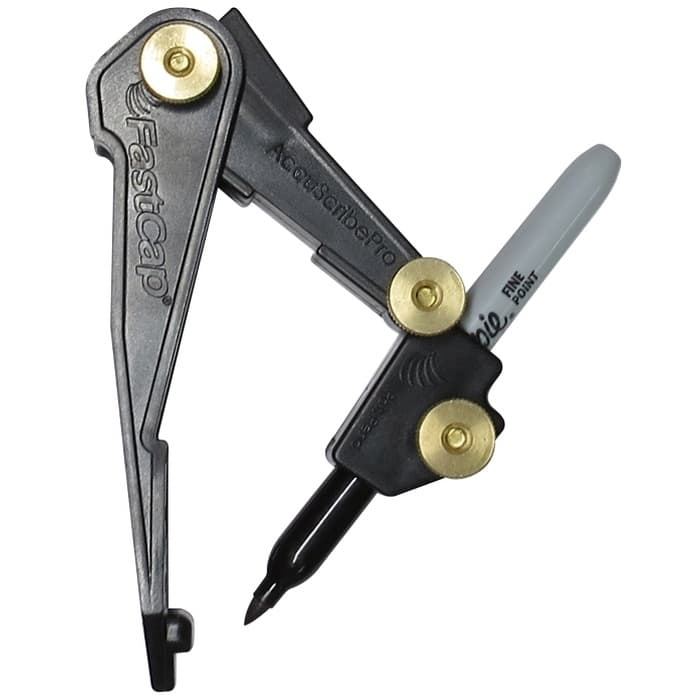
How do scribing tools help fit cabinets to uneven walls?
A scribing tool traces the wall's shape onto a filler, scribe strip or countertop, so you can cut the part to match. That closes gaps without heavy caulk or extra trim. Set the scribe to the widest gap, keep it level as you run it along the wall, and cut just to the line.
How do I keep my marking tools sharp?
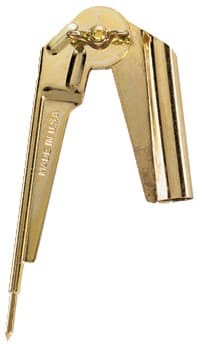
Hone marking knives and scribe points on a fine stone, just as you would a chisel, and replace worn tips. Keep covers on sharp points so they stay keen and don't catch your hand in a drawer.
How can I make layout lines easier to see on dark wood?
Use a white or silver pencil, or rub chalk into a knife line so it shows clearly. Blue painter's tape gives a light surface to mark on and helps protect the finish. Light from a low angle also makes knife lines stand out, so move a work lamp to the side when you lay out cuts.