What temperature settings do I need on a heat gun?
Lower heat works for shrink tubing, softening adhesives and bending thin plastics, and higher heat works for stripping paint. Variable temperature and airflow controls give you flexibility across different jobs. Start low and raise the heat only as needed, since too much heat scorches wood and can damage nearby finishes.
Which nozzles are useful for different jobs?
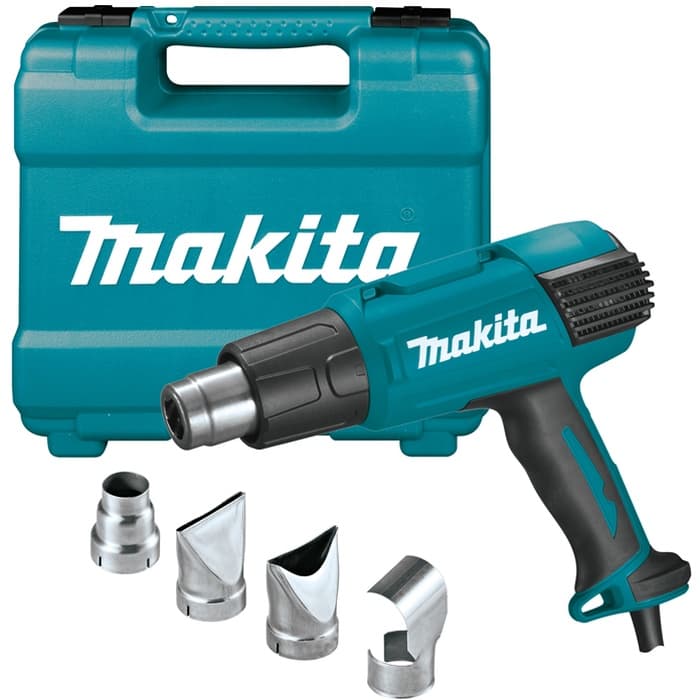
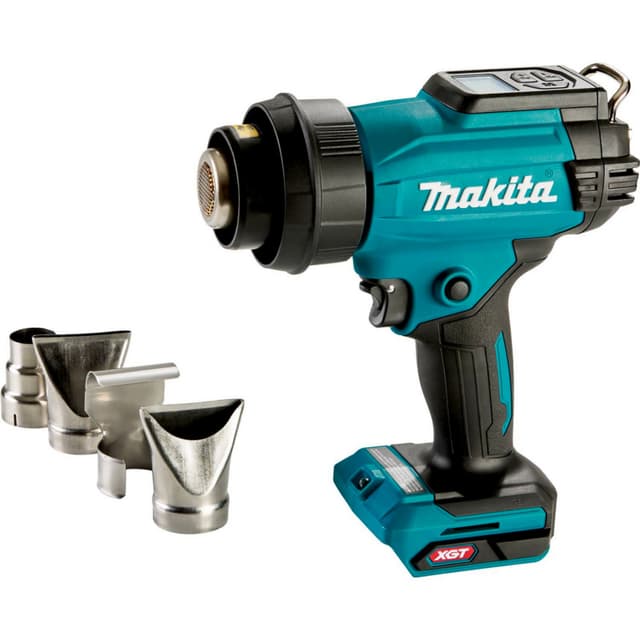
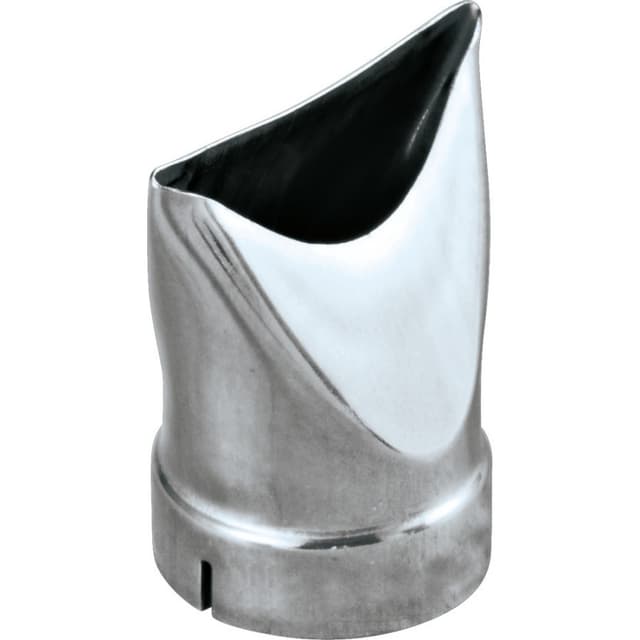
Flat or spreader nozzles cover wide areas for paint stripping, reflector nozzles wrap heat around pipes and tubing, and concentrator nozzles focus heat on a small spot. Use only nozzles made for your tool. A glass protector nozzle deflects heat away from window panes when you strip paint from sashes and frames.
How does a heat gun help remove edge banding or veneer?
Heat softens the glue, so you can peel off old edge banding or lift loose veneer without prying or heavy sanding. That often saves the panel for re-banding. Move the gun steadily along the edge on a medium setting, and peel the band as it lets go, so you don't scorch the panel face.
How do I strip paint with a heat gun without scorching wood?
Keep the tool moving a few inches from the surface, heat until the paint bubbles, then scrape. Don't hold it in one spot. Older paint may contain lead, so follow local safety rules for lead paint.
How long should the tool cool before I put it away?
Let it cool fully on its stand before storage; the nozzle stays hot for several minutes after shutoff. Keep it away from flammable materials and out of reach while it cools. Some models have a cool-down setting that runs cool air to bring the temperature down faster, so check the manual for yours.