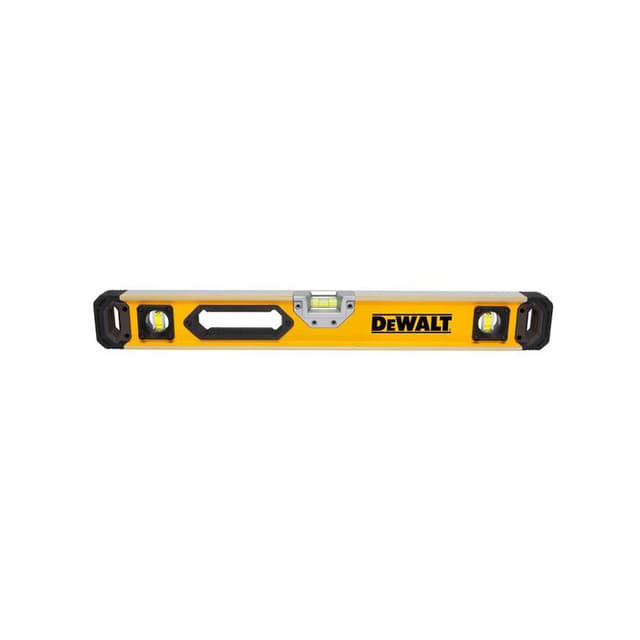
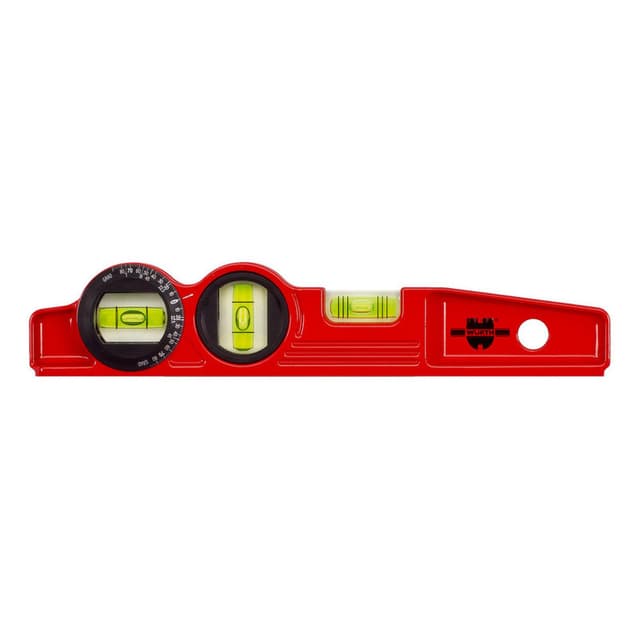
What length level should I use for cabinet installation?
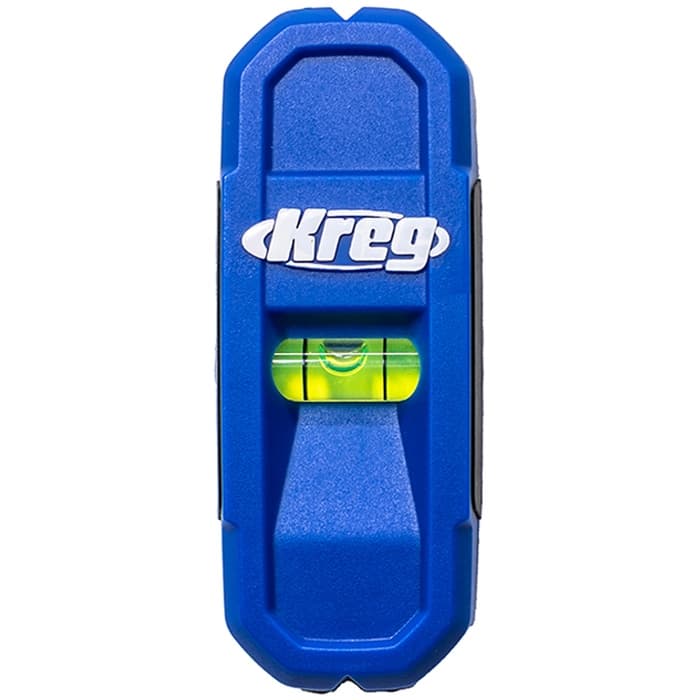
A 24-inch level works for checking single cabinets and shelves, while a 48-inch or longer level checks a full run of cabinets or a countertop. A torpedo level fits inside cabinet boxes and tight spaces. Many installers carry a short and a long level.
When should I use trammel points instead of a compass?
Use trammel points to draw arcs and circles larger than a compass can reach, such as round tabletops or arched door tops. The points clamp to a straight bar or stick, so the radius is limited only by the bar's length.
How does a stud sensor help when hanging cabinets?
It lets you place screws into framing on the first try, which gives the cabinet a strong hold and avoids extra holes in the wall. Fewer misses mean less patching and a faster install. Mark each stud center on the wall above the cabinet line, then confirm with a small test nail where the cabinet will hide it.
How do I check if a level is accurate?
Set it on a flat surface and note the bubble position, then turn it end for end in the same spot. If the bubble reads differently, the vial is off. Some levels let you adjust the vial; replace those that can't be adjusted.
Why does my stud sensor give false readings?
Weak batteries, moving too fast, textured walls and metal pipes or wires can all cause false readings. Calibrate the sensor on the wall before you start, move slowly and confirm with a small finish nail in a spot that will be covered.