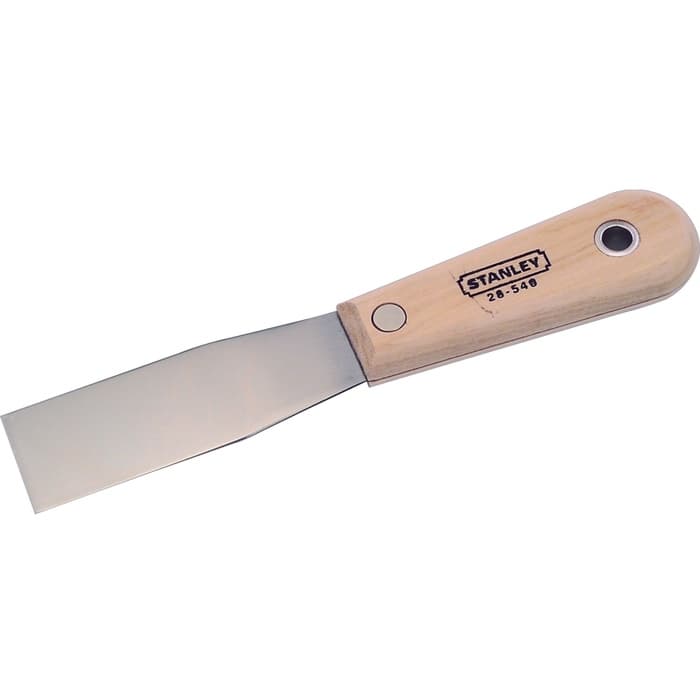
Should I choose a flexible or stiff putty knife?
A flexible blade spreads filler smoothly and feathers it thin over nail holes and small defects. A stiff blade works better for scraping off old putty, glue or paint and for pressing filler deep into larger holes.
What blade width works for filling nail holes and seams?
A 1- to 1 1/2-inch blade handles nail holes and small repairs with good control. Wider blades, 3 inches and up, spread filler over seams and larger areas with fewer ridges. A flexible blade feathers filler thin at the edges, while a stiff blade suits scraping and pressing thick filler into deep gouges.
How does the right putty knife reduce sanding?
A knife that suits the job lets you apply filler flat and level with the surface, so less excess needs sanding. Less sanding means less risk of cutting through veneer or rounding crisp edges. Pull the blade at a low angle in one smooth pass, and leave the filled spot just slightly proud of the surface.
How do I keep filler from drying on the blade?
Wipe the blade clean often while you work, and wash it right after with water or the solvent the filler maker calls for. Dried filler leaves lumps that drag and scratch the next coat. Keep a damp rag or a scrap of cardboard nearby so you can clear the blade between passes.
Can a putty knife scratch wood or finishes?
Yes. Sharp corners and nicks on the blade can gouge soft wood and finishes. Round the corners slightly with a file, keep the blade at a low angle and use a plastic blade on delicate surfaces.