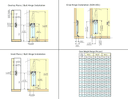
Sugatsune HDS-10 Left Soft-Down Stay Purpose
Sugatsune HDS-10 left soft-down stay is the left side component of the HDS-10 series designed for a downward-opening flap door, so it supports that specific motion when building or servicing a cabinet front that folds down. As a light duty stay, HDS-10KL/BLK is suited to lighter flap fronts where controlled movement is needed without overspecifying heavy hardware, helping keep motion smooth on smaller or moderate-size doors. The stay is used on the left side of the cabinet, which simplifies layout when you are planning mirrored left and right components around a central opening. HDS-10 is designed to hold the door in both the closed and opened position, so the flap remains stable at rest instead of sagging or drifting, which helps with predictable hands-free access to the interior. The stay functions as a soft-down stay, so the downward-opening flap door moves in a controlled way that reduces slamming.
Key HDS-10KL/BLK Details For Cabinet Projects
- The stay is specified for a downward-opening flap door, aligning with bar, media, or work cabinets that open down, so the hardware motion matches the intended door travel and avoids fighting hinge geometry.
- HDS-10 is designed to hold the door in the closed position, so the flap remains pulled in when shut, which supports cleaner cabinet lines and consistent reveal control on finished installations.
- HDS-10 is designed to hold the door in the opened position, so the flap stays down while in use, which helps during loading, unloading, or working off the open surface without constant support.
- The stay is for the left side of the cabinet, giving a clear orientation reference during layout and installation, which reduces guesswork when pairing it with the corresponding right side component.
- The black HDS-10KL/BLK variant visually ties in with darker interiors or hardware finishes, which helps the stay blend into the cabinet environment instead of drawing attention.
Installation Role With Hinges And Door Torque
This Sugatsune HDS-10 series stay is used with a downward-opening flap door that is hung on piano, butt, or drop hinges, so it works in combination with common hinge types instead of replacing them. Because HDS-10 is used in pairs, one on the left and one on the right, the door load is shared across both stays, which supports more even motion and reduces stress on a single side. The torque calculation for this stay is defined as Torque = Door Height x 1/2 x Door Weight, which gives a formula-based way to relate the door size and mass to the stay selection so the motion characteristic matches the actual door construction. As a light duty stay, HDS-10KL/BLK suits doors within the load range expected for light duty torque, supporting efficient use on appropriate flap sizes.
Using This Light Duty Stay In Real Projects
Where The HDS-10 Left Stay Fits Best
The HDS-10 left light duty soft-down stay is intended for the left side of a cabinet with a downward-opening flap door, so it fits best in layouts where the door front folds down to give access to an interior space. It is specified to work with flap doors that use piano, butt, or drop hinges, so it fits into projects where those hinge types are already part of the design, such as continuous hinged bar fronts, small butt-hinged compartment doors, or drop-front cabinets. Because HDS-10 is designed to hold the door in the closed position, it plays a role in keeping front panels seated against the cabinet face, which is important when alignment and consistent gaps are part of the finished look. The same stay is also designed to hold the door in the opened position, so in use the flap remains down without support, which suits work surface style openings, serving stations, or access doors where the open flap must remain stable.
Why HDS-10 Design Supports Predictable Motion
The light duty rating of the HDS-10KL/BLK means the stay is tuned for lighter flap doors, so the resistance it provides is matched to that application, helping the soft-down function work as intended without overpowering a smaller front. The specified torque calculation, Torque = Door Height x 1/2 x Door Weight, provides a defined relationship between door geometry and the operating characteristics of the stay, so installers can size the door proportions within a suitable range for the light duty design. Using the stay in pairs, as stated for the HDS-10, distributes the working load between left and right sides, which promotes balanced motion and reduces twisting of the flap during opening and closing. Working with piano, butt, or drop hinges keeps the hinge function separate from the stay function, so hinges handle pivoting while the stay manages controlled movement and holding positions, giving more predictable performance over the life of the cabinet.
Common Questions About HDS-10KL/BLK Lid Stay Use
What type of door is the HDS-10KL/BLK designed for?
The HDS-10KL/BLK is designed for a downward-opening flap door, so it supports doors that fold down to open rather than lifting up or swinging sideways.
How does the HDS-10 left stay interact with hinges?
The HDS-10 left stay is used with piano, butt, or drop hinges, so the hinges provide the pivot while the stay controls motion and holding positions on the flap door.
Why is the HDS-10 stay used in pairs on a cabinet?
The HDS-10 stay is used in pairs so left and right components share the door load, which helps keep movement balanced and reduces twisting as the flap opens and closes.
What does the light duty rating mean for HDS-10KL/BLK?
The light duty rating means the HDS-10KL/BLK is suited to lighter downward-opening flap doors, so its resistance and soft-down control match smaller or lighter fronts.
How is torque determined for an HDS-10 flap door?
Torque for an HDS-10 flap door is defined as Torque = Door Height x 1/2 x Door Weight, relating the door size and mass to the stay's working load.
What cabinet position does the HDS-10 left stay hold?
The HDS-10 left stay is designed to hold the door in both the closed and opened position, so the flap remains stable when shut and when fully open.
Select This HDS-10 Left Stay For Flap Projects
The Sugatsune HDS-10KL/BLK left light duty soft-down stay gives a defined solution for a downward-opening flap door using piano, butt, or drop hinges, with holding action in both closed and opened positions. For projects needing paired stays with a clear torque relationship tied to door height and weight, this HDS-10 series component from Wurth Baer Supply aligns the hardware choice with the intended flap motion and duty level.