What do the paper weights A through F mean on abrasive discs?
The letter rates the paper's weight and stiffness, from A, the lightest and most flexible, to F, the heaviest. Discs for random-orbit and finishing sanders usually run on C to E weight, which holds the grains flat for an even cut but still flexes a little. A heavier disc paper cuts deeper and resists tearing at the rim.
Should I choose hook-and-loop or PSA abrasive discs?
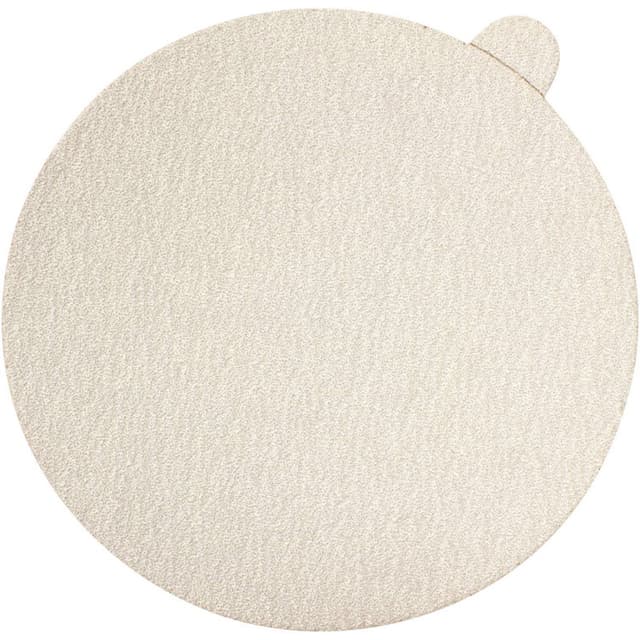
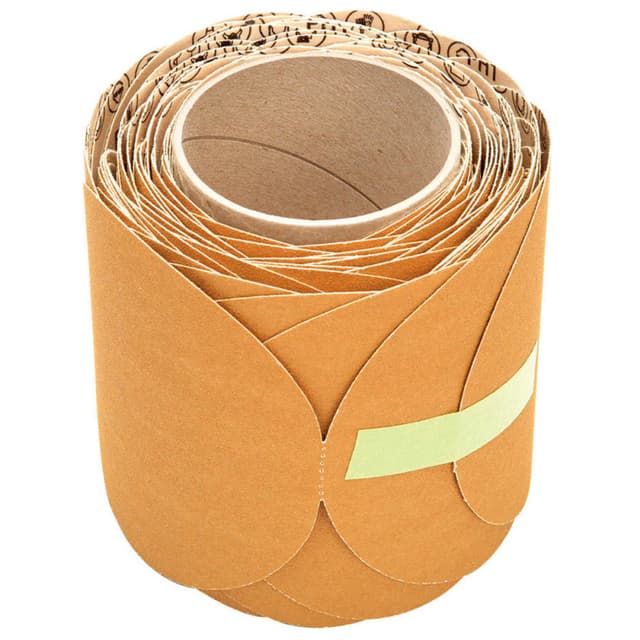
Choose hook-and-loop when you switch grits often, since the disc grips the hooks on the pad and pulls off in seconds. PSA discs use a peel-and-stick adhesive on a smooth pad face and give a firm, flat cut, but most are used once. Your pad sets the choice: a hook face takes hook-and-loop discs, and a smooth face takes PSA.
Why do dust holes and mesh discs matter for the finish?
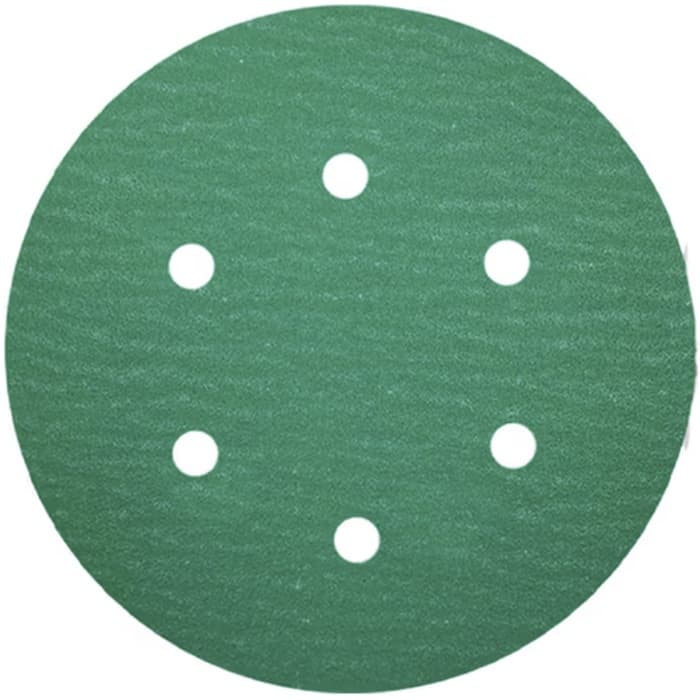
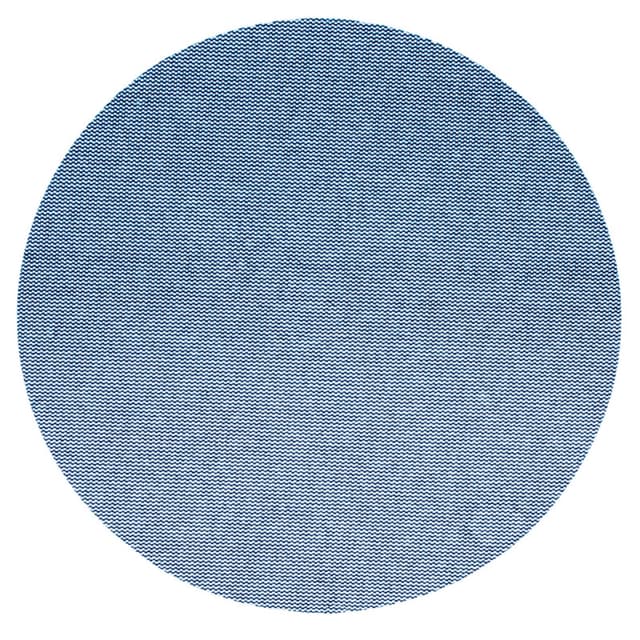
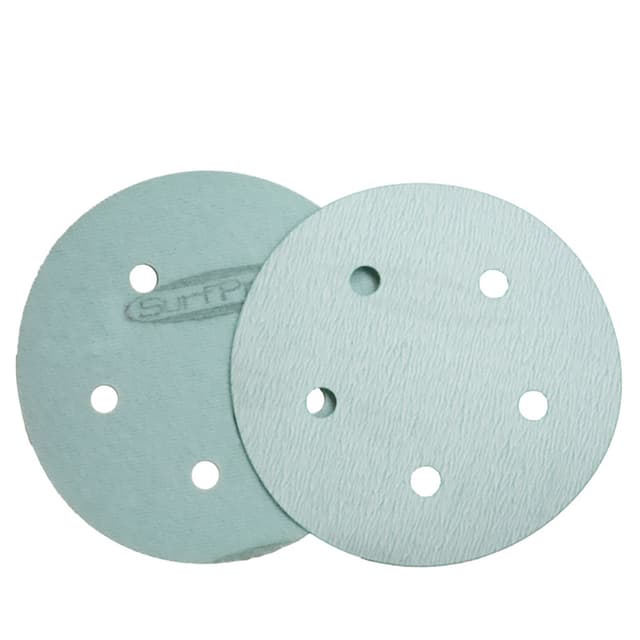
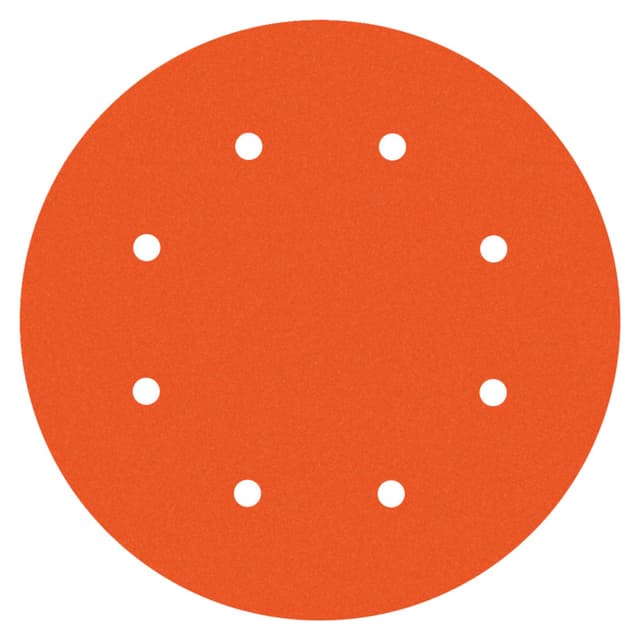
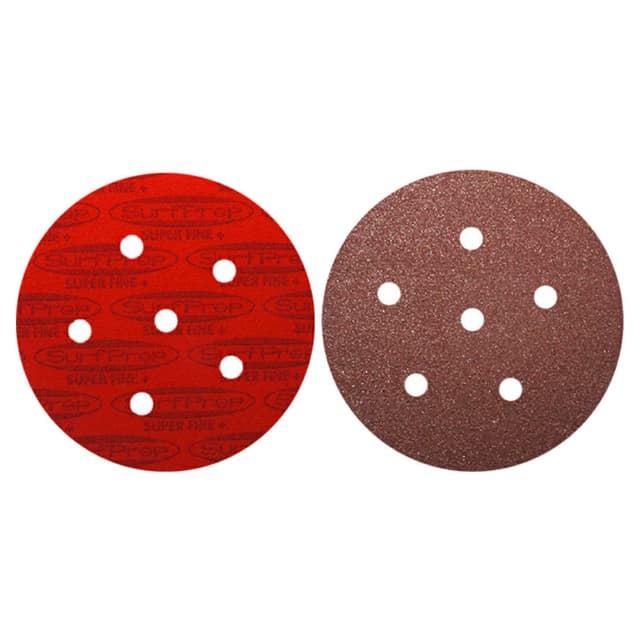
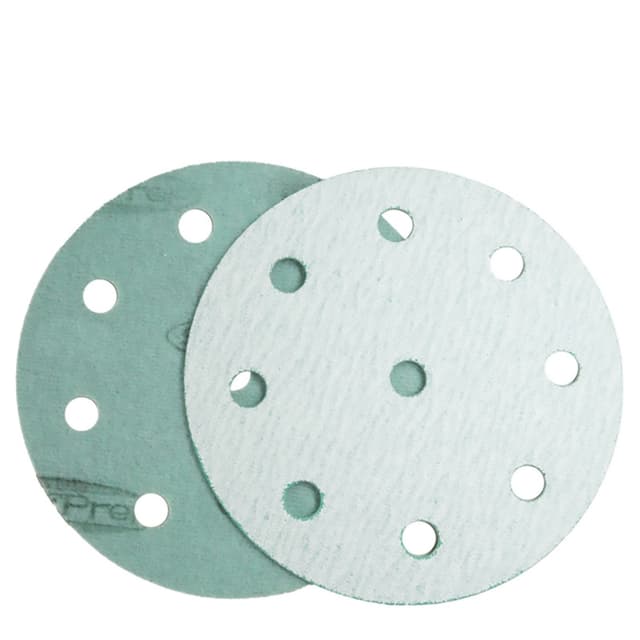
Pulling dust away from the disc keeps the grains cutting and leaves a cleaner scratch. Dust left on the face clogs the abrasive, heats the work and drags loose grains across the surface. Line up the holes in the disc with the holes in the pad, or use a mesh disc, which lets the extractor pull dust through its whole face without alignment.
Which mineral should I pick for sanding discs: aluminum oxide, silicon carbide or ceramic?
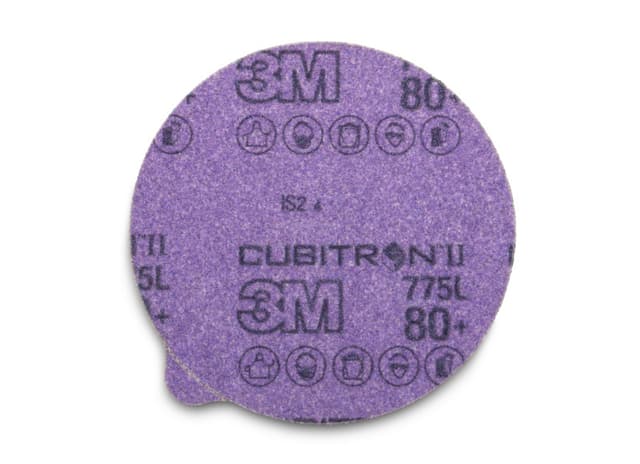
Pick aluminum oxide for general sanding of bare wood, since its tough grains fracture to expose new edges. Pick silicon carbide for finishes, paint, plastics and wet sanding, where its sharp grain leaves a fine, even scratch. Pick ceramic or zirconia for coarse discs that face heavy pressure, such as stripping old finish or leveling glue-ups.
How do I know when a sanding disc is worn out or loaded?
Change the disc as soon as it stops cutting, even if it still looks usable. Warning signs include slow progress, a warm surface, shiny burnished spots and dust caked between the grains. Cleaning can revive a clogged disc for a while, but a dull one only rubs, and it leaves marks that you will need to sand out later.