Which paper weight should I choose for abrasive sheets?
Choose light A to C weight paper for hand sanding, because it folds around edges and follows shapes without cracking. Choose C to E weight for finishing sanders, where a stiffer sheet holds the grains flat and wears more slowly. Fine grits for finish work often come on the lighter weights, since flexibility matters more there than strength.
When should I use wet/dry silicon carbide sheets?
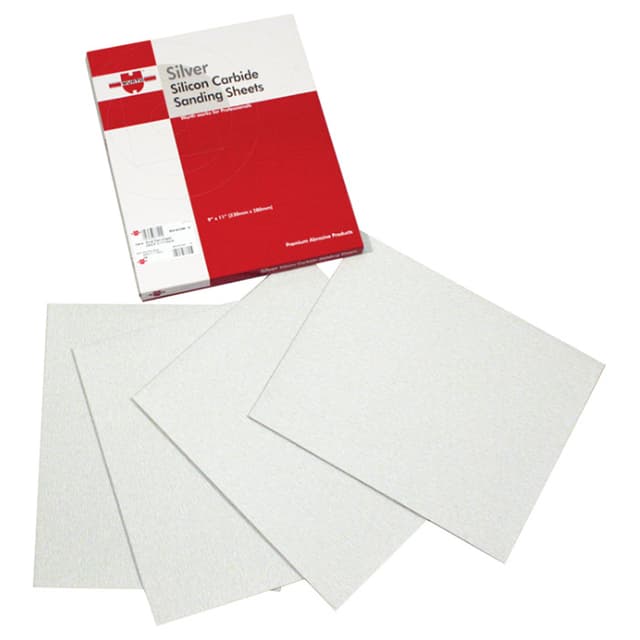
Use wet/dry silicon carbide sheets for fine work on finishes, such as leveling a cured coat or taking out runs and dust nibs. The waterproof backing lets you sand with water, which cuts dust and keeps the sheet from clogging. Keep water off bare wood and away from electric sanders, and wipe off the slurry to check progress.
How do stearated abrasive sheets help between finish coats?
Stearated sheets resist clogging, so one sheet lasts longer and cuts evenly when you scuff a coat of finish. The coating keeps soft finish dust from balling up into small lumps that scratch the surface. Scuff with 320 to 400 grit in a single, light pass, and let each coat cure fully first, because soft finish fills any sheet fast.
Can stearated sandpaper cause problems with water-based finishes?
It can. Stearate is waxy, and leftover residue may cause fisheyes, small craters where a water-based finish pulls away from the surface. Some finishers switch to plain, non-stearated sheets for the last sanding before a water-based coat. Either way, vacuum the surface and wipe it with a cloth that suits the finish before the next coat.
How do I fold or tear a sanding sheet for hand work?
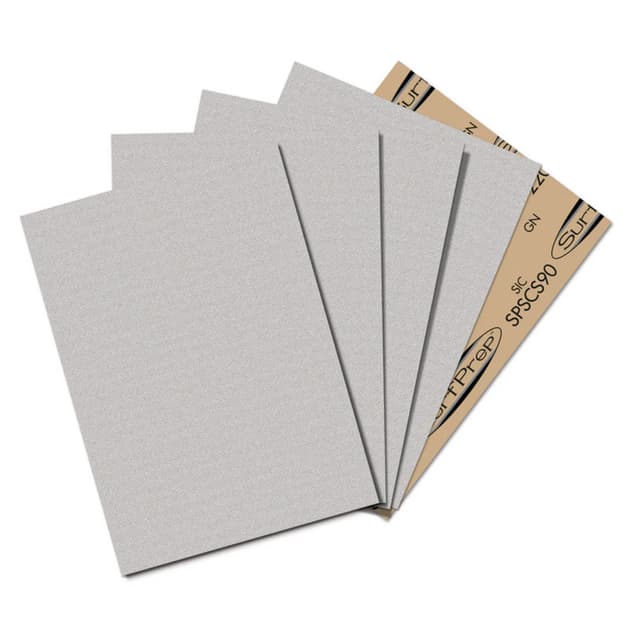
Fold the sheet into thirds so the abrasive faces out on both sides and grit never rubs against grit. For a sanding block, tear the sheet against a straightedge to get clean pieces that fit. Write the grit on the back of small pieces, so a coarse scrap does not end up in a fine step.