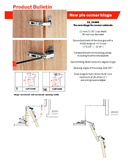
65-Degree Opening and Corner Fit in One Hinge
This Salice Series 200 pie cut corner hinge is built for the specific geometry of a blind or angled corner cabinet, hanging doors on both face-frame and frameless boxes with a self-close spring and a 65-degree swing that keeps the door clear of adjacent surfaces.
Key Features
- 65-degree opening angle is sized for corner cabinet applications where a wider swing would collide with an adjacent door or wall.
- Self-close spring pulls the door shut over the last few degrees of travel without a damper.
- Pie cut corner geometry matches the angled door fronts used in blind and pie-cut corner cabinet configurations.
- Dowel mount presses the hinge cup into pre-bored dowel holes in the door for a fast, secure attachment without cup screws.
- Works on face-frame and frameless cabinets when paired with the appropriate Salice base plate, sold separately.
- Height and side adjustment lets you dial in an even reveal after the door is hung.
The Corner Cabinet Problem This Hinge Solves
A standard cabinet hinge opens too wide for a corner position. When two cabinet runs meet at a corner, the door on the angled pie-cut front can only swing so far before it contacts the adjacent cabinet face or door. The 65-degree opening angle on this hinge is the engineering answer to that constraint: the door gets the access it needs without swinging into neighboring cabinetry. This is not a restricted angle on a standard hinge — it is a purpose-built geometry for corner cabinet door placement.
The 35mm cup bores into the back of the door, and the dowel mount presses into pre-bored dowel holes beside the cup for a screw-free cup attachment. The hinge arm then connects to a Salice base plate mounted to the cabinet stile or side panel. That plate is a separate purchase; use Salice plates matched to this series. Plates from other brands will not connect to this hinge.
Steel Build in a Nickel Finish
The hinge is plated steel in a nickel finish. Corner cabinet hardware takes repeated daily use from every direction the angled door swings, so the steel construction holds its geometry over time. The nickel finish coordinates with other Salice Series 200 hardware and with visible nickel pulls and knobs in the same run. Height adjustment of plus or minus 2mm and side adjustment of plus 4.5mm and minus 1.5mm give the fine-tuning needed to bring an angled door to a clean, even reveal after installation.
Where This Hinge Belongs
Cabinet shops and contractors building or replacing corner base or wall cabinets with pie-cut fronts are the primary users here. The dowel mount suits CNC production environments where doors arrive pre-bored. Remodelers replacing worn or mismatched corner hinges will find the Series 200 a reliable, workhorse choice. This hinge fits standard doors in the 16 to 22mm thickness range. For doors outside that window, confirm the cup depth against your door before ordering.
Because this is a self-close hinge, the spring draws the door shut on its own but does not cushion the close. If the project calls for a damped, quiet close on corner doors, look to the Silentia+ soft-close version of this series instead.
Common Questions
Why does a corner hinge only open to 65 degrees?
A pie-cut corner door can only swing so far before it contacts the adjacent cabinet or wall. The 65-degree angle is designed specifically for that geometry — it is the correct opening for corner placement, not a shortcoming of the hinge.
Do I need a separate mounting plate?
Yes. The hinge arm connects to a Salice base plate that mounts to the cabinet stile or side panel. The plate is sold separately. Use Salice plates matched to this series; plates from other brands will not fit this hinge.
What is a dowel mount and does my door need special prep?
The dowel mount means the hinge cup attaches by pressing into pre-bored dowel holes in the door rather than using cup screws. If your doors are bored on a CNC or line-bore machine with the correct dowel pattern, the hinge presses straight in. If not, the holes need to be bored before installation.
Is this hinge the same as a standard concealed hinge?
No. A pie cut corner hinge has geometry specific to angled corner cabinet doors. A standard concealed hinge opens much wider and will not position a corner door correctly within its angled frame.
The Right Hinge Makes Corner Doors Work
Specify this hinge when the corner cabinet design calls for a pie-cut door that closes on its own, clears adjacent cabinetry, and stays square through daily use.