CompX National Disc Tumbler Cam Lock For Cabinets
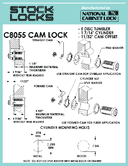
CompX National disc tumbler cam lock gives you a keyed locking point for drawers and right-hand or left-hand doors, so one part number handles common cabinet directions on the job. The lock uses a 1-7/16 inch cylinder length, which sets the reach through the front and frame to match typical furniture and casework thickness. A 3/4 inch mounting hole size defines the bore you cut or drill, so layout fits standard drilling patterns in many shop workflows. The antique brass finish establishes the visual match where a warm, traditional hardware look is required. A 90 degree clockwise rotation stop washer controls how far the cam swings, which keeps the throw consistent to catch strikes or cabinet edges without over-rotating. The disc tumbler construction provides the keyed locking function installers expect in cam-style cabinet locks.
Key Cam Lock Details That Support Daily Use
- The 90 degree clockwise rotation stop washer limits cam travel, which helps align the cam with strikes or cabinet edges and reduces misalignment during repeated locking cycles.
- The design works on drawers and on right-hand or left-hand doors, which allows one lock style to cover multiple cabinet orientations in a project without changing hardware layout.
- The 1-7/16 inch cylinder length defines the maximum combined front and frame thickness, so cabinets within that range can be locked while keeping the key interface accessible.
- The 3/4 inch mounting hole specification lets installers use a consistent boring operation, saving layout time when running multiple doors and drawers through drilling or CNC.
- The key is removable in both locked and unlocked positions, which supports workflows where users want to secure the key after locking or leave it accessible while the lock remains open.
Cam Lock Fit, Mounting Hole, And Cylinder Length
The 3/4 inch mounting hole requirement drives the hole size used in doors and drawer fronts, so bit selection and drill programs can be standardized. The 1-7/16 inch cylinder length ties directly to how much material the lock can pass through, which matters when working with different front and frame combinations in cabinet bodies. For overlay applications, the combined thickness of front and frame must not exceed the cylinder length, so staying within that limit helps the cam reach its strike reliably. The specified 90 degree clockwise rotation means the cam moves from its rest position through a quarter turn to lock or unlock, so knob travel and clearances can be planned around that motion.
Where This Antique Brass Cam Lock Performs Best
Using The Cam Lock On Drawers And Doors
This antique brass cam lock is described for use on drawers and on right-hand or left-hand doors, so it suits mixed casework where both access types appear. The cams described for lipped or overlay construction, with a straight cam and 1-1/2 inch extension, allow the lock throw to reach around a lip and catch, which is important when overlay fronts stand off the case. The formed cam for flush construction, with a 1-1/8 inch extension and 11/32 inch offset, positions the locking surface to meet a flush frame, so the lock can secure doors set even with the cabinet. For overlay layouts using a 3/4 inch front with a 3/4 inch frame, the product notes reference using an NLC8053 lock and NLC7014-2C cam, which signals that the described C8055-C415A-4G model serves applications where the combined thickness does not reach that heavier overlay stack.
Details That Help Achieve Consistent Locking Results
The key being removable in both locked and unlocked positions affects how users interact with the cabinet; it lets the operator remove the key after securing the door or drawer or store it elsewhere while the unit remains open. This flexibility can streamline workflows in shops, offices, or storage areas that demand controlled access but frequent opening. Stock keying options are outlined as KA for all keyed alike to a specified key number, KD for all keyed different, and KDMKD for all keyed different and master keyed, which sets how locks relate to each other in a project. In practice, these keying schemes help plan multi-cabinet installations where some locations share keys and others remain unique, or where a master key is used for overarching access. The mention that REMOVACORE versions of this lock are available indicates there are cores designed for easier core changes, which can matter in environments where key control programs require core replacement without disturbing the main lock body.
Common Questions About This C8055-C415A-4G Cam Lock
What cylinder length does the C8055-C415A-4G cam lock use?
The CompX National disc tumbler cam lock uses a 1-7/16 inch cylinder, which defines how much front and frame thickness it can pass through while still allowing the cam to engage.
What mounting hole size is required for this cam lock?
This cam lock is specified for a 3/4 inch mounting hole, so drilling or boring operations must follow that diameter for a proper fit in doors or drawer fronts.
How far does the cam on this lock rotate?
The CompX National disc tumbler cam lock uses a 90 degree clockwise rotation, which limits travel to a quarter turn for predictable engagement with strikes or cabinet edges.
Where can this antique brass cam lock be used on cabinets?
The lock is described for drawers and for right-hand or left-hand doors, so it works across common cabinet access points in casework and furniture builds.
How does key removal work on this cam lock?
The cam lock allows the key to be removable in both locked and unlocked positions, giving users flexibility in how they handle key control during daily operation.
What keying options are mentioned for this cam lock?
Stock keying is described as KA for all keyed alike, KD for all keyed different, and KDMKD for all keyed different and master keyed, guiding how locks are grouped in a project.
Selecting This Antique Brass Cam Lock For Your Job
The CompX National disc tumbler cam lock C8055-C415A-4G pairs a 1-7/16 inch cylinder with a 3/4 inch mounting hole and 90 degree clockwise rotation, aligning with common cabinet drilling and locking layouts. Antique brass finish supports projects needing a traditional look, while use on drawers and on right-hand or left-hand doors fits mixed casework runs. Defined cams for lipped or flush construction and clear keying schemes help plan locking points and key control around real project requirements. Use these verified details to match this cam lock to the fronts, frames, and access patterns on your next installation.